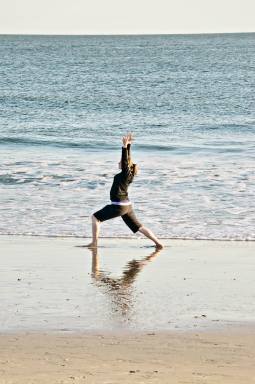
Rox Does Yoga

Yoga, Wellness, and Life

Back in the saddle September 17, 2012

Filed under: checking in,reflections,yoga lifestyle — R. H. Ward @ 1:00 pm
Tags: , ,

I haven’t blogged much in recent weeks because I’ve been preparing to go back to work. Last week was my first full week back at the office, and already I feel swamped, overwhelmed, snowed under by the work. My colleagues did their best to watch over my projects all summer, keeping things going and responding to author queries, but I’m now responsible for getting things to the next level. I’ve also had to travel for a business meeting already: just from Philly to DC, and only for a quick day trip and lunch meeting rather than an overnight, but still. All this while I’m still trying to adjust to pumping breast milk and lugging my Medela InStyle everywhere (including to DC); working out transportation/commuting issues now that my husband F, temporarily home with YogaBaby, can’t just run me to the train station; crying every night when I see my sweet little one look up at me and realize I just missed a whole day of her brand-new life. Discovering, in short, what it means to be a working mother.

The main thing on my mind lately is time. Time has separated itself into two distinct categories: time with my daughter, and time doing anything else. The “anything else” is often necessary (like working is necessary for keeping the little one in diapers), but I’m finding that I want to keep anything not involving the baby to a minimum. When we’re talking about shortening my commute time (by getting me a bike so I don’t have to walk to the train station – which by the way is really fun) or taking a 30-minute lunch so I can get home earlier, that’s one thing, but how do I prioritize yoga and meditation? They’re things I need for myself, to be a healthy person and therefore a good mom, but how do I take that time away from my child when I already by necessity have to be away from her so much? And how do I justify healthy social things – meeting a girlfriend for a drink, or going to a lecture at the library or museum – when first of all I feel like I barely see my kid, and secondly I’m not making enough time for yoga and meditation? It all has to fit in somewhere, right? How? (That’s not a rhetorical question. If you have the answer, please tell me!)

I think, in the near future, that I’m going to try to revisit what the yogic scriptures say about time and reflect on what that may mean in my situation. I’ll post here when I can, and only when it won’t drastically interfere with my baby time. (For example, I wrote this post by hand in the “mothers’ room” at the office while I was pumping, and I’m now typing it up six days later with a sleeping sweetie in a milk coma on my lap.) In the meantime, I’ll try to take a lesson from my YogaBaby and keep my focus on the present moment.


Veg Link: Five Religious Approaches to Thinking about Meat Eating August 23, 2012

Filed under: reflections,yoga lifestyle — R. H. Ward @ 5:12 pm
Tags: , , ,

Ever since that terrific radio program with Matthew Sanford a few months ago, I’ve been following NPR’s On Being series on Facebook. Earlier this week they posted this piece on the ethics of eating meat: Five Religious Approaches to Thinking About Meat Eating.

Because I became a vegetarian for ethical reasons, and because I do a lot of thinking about the intersections of Christianity and Eastern religious practice, I found the five approaches described here very interesting. I hadn’t realized that most religious traditions begin with a vegan worldview. I also found the discussion of compassion to be compelling, since ahimsa, or nonviolence, was at the heart of my conversion to a vegetarian diet. However, all of the approaches given here may come in handy in future conversations about why being a vegetarian is right for me.


Baby Meditation August 8, 2012

Filed under: reflections,yoga lifestyle — R. H. Ward @ 9:00 am
Tags: , ,

At one month old, my baby is a lot more wakeful, and much more alert, now than she was before. She’s awesome, and I love watching her discover the world. The flip side, though, is that hanging out with her can get a little monotonous. Don’t get me wrong, being with her is amazing and every flail of her tiny arms is miraculous, but watching her flail for an hour straight when she doesn’t feel like sleeping? Even as I hold her and rock her and talk and sing to her, I keep finding my mind drifting. When will she nod off so I can wash those dishes? I just got the schedule for the monthly lecture series I went to all last year – will I be able to go to any this year with a baby at home? I half-wrote this post in my head at least three times before I was actually able to get to the keyboard. And the baby knows she doesn’t have my full attention. When I one-handedly check my phone, she fusses, even though I’m still holding her and rocking her. I catch myself getting distracted and it bothers me – this is likely to be the only period in my or her life when I have uninterrupted time to devote to nothing but her, and I don’t want to cheat either of us of that. Yes, laundry and dishes are important, and so are my other projects, and I can do those things while the baby sleeps, but when she’s not sleeping? Other stuff should fall by the wayside and she should get priority.

But that’s easy to say and harder to put into practice. I know every mom must get distracted from time to time – moms have a lot of things to juggle – and I’m not going to beat myself up about that, but I do genuinely want to enjoy this time with her. And it occurred to me: I can treat spending time with my baby as a meditation practice. I have the perfect object to center my attention in the present moment. I can’t sit in a traditional meditation position, since I have to follow the baby’s lead and shift positions or walk around as I hold her, but I can still focus my attention and try to avoid distractions.

Yesterday I tried it. The baby had slept all morning, and by the afternoon, it wasn’t doing either of us any good trying to get her to nap because she wanted to be awake. I decided that, rather than forcing her to sleep so I could follow my distractions and do something else, it might be better just to do what she wanted, so that’s what I did. I challenged myself to stay focused only on her for half an hour. I kept catching myself trying to do other things, wanting to check email, worrying about the future, even just reaching for my water glass or wanting a snack. It was incredibly difficult to sit and pay attention only to her. But it was also pretty awesome. She was calm for that entire 30 minutes, no crying or even fussing really. She looked at me and gurgled and flailed and kicked, and I looked back. By the end, I was counting down the minutes, but putting in the effort to be truly present with her was something we both enjoyed. I don’t know if Zen masters would recognize it as meditation, but it was excellent practice at focusing my attention in the present moment.


Bob Ross as Guru August 3, 2012

Filed under: reflections,yoga lifestyle — R. H. Ward @ 10:16 am
Tags: , ,

Today I wanted to share this video, which actually made me tear up a little: Bob Ross Remixed.

I grew up watching Bob Ross paint on TV. I even took a Bob Ross method painting class when I was 12 (my oil painting still hangs over the mantel in my parents’ house). I’ve always loved Bob’s calmness and gentleness, how every element he adds to a painting just makes it a happier place. I never met Bob, but watching him on TV, I always had the sense that he genuinely cared about me, that he believed I could create something beautiful. I think he did feel that way about his viewers and that’s why he appealed to so many people and is still so beloved years after his death.

Watching this video, it struck me that one could do worse for a spiritual guide than Bob Ross. He encouraged people to use their own creativity, to create joy and good thoughts. He said there are no mistakes, just happy accidents. At least in his television persona, he feels like the human embodiment of ahimsa, or nonviolence. We could all do a lot worse than to emulate Bob’s kindness and apply his words of wisdom about painting not just in our creative projects but throughout our lives.


Yoga Mom: Present Moment, Wonderful Moment July 26, 2012

Filed under: reflections,yoga lifestyle — R. H. Ward @ 10:59 am
Tags: , , ,

Two and a half weeks in, and motherhood is pretty awesome so far, as is my gorgeous kid. I’m amazed by how enchanted I am with her – her goofy faces, her little toes, even the contents of her diapers are all endlessly fascinating. Yesterday we had a really good day together. Nothing extra-special, just us girls hanging out. She’s starting to become more aware of what’s going on around her, of what I look like from a few feet away, of what my voice sounds like when I sing to her, all of which just inspires me to interact with her more. Yesterday we sang and chatted and snuggled, and it was a really good day.

One thing that struck me is that I’m a better mom to her when I’m happy. This seems like an obvious no-brainer, but it’s the sort of thing you don’t really think about, you know? Of course there are times when I’m really tired and I just stare at her all bleary-eyed, without the energy to engage with her. Some of that is just part of the package deal of having a little baby, but part of it has been because I’m worrying about my husband having to go to work and I’m trying to take on as much of the nighttime stuff as I can so he can sleep. But when I try to do everything myself, I’m not taking care of myself, which I should do just in general and because I’m still healing. If I’m not taking care of myself, then I’m not going to be as present for her as she deserves. There have also been days when I’m preoccupied, worrying about the future, about what will happen when I have to go back to work – but when I’m worrying about the future, I’m not here in the present moment with her. Yesterday I’d had a decent amount of sleep, and for some reason I let all of the worrying go and just spent time with her. And it was a great day.

From a yogic perspective, this reminds me of the four duties of a yogi – that the yogi needs to care for herself first, in order to have enough to give to others. And it also reminds me to live in the present moment, rather than dwelling on the past or worrying over the future. And on that note, someone’s waking up, so I’m going to spend this moment with her.


books: The Farthest Shore, by Ursula K. Le Guin June 19, 2012

Filed under: books,reflections — R. H. Ward @ 2:04 pm
Tags: , ,

The Farthest Shore, by Ursula K. Le GuinWait a minute, you may be thinking. You come to this blog for yoga, and here is a book with a picture of a dragon on the cover. Now, many of you may not know this, dear readers, but I have loved fantasy novels for far longer than I’ve loved yoga. Being so far along in my pregnancy, I haven’t felt up for reading much nonfiction or anything that feels like a “serious” book – I wanted fun, light reading. It seemed like a good time to revisit some of my favorite fantasy novels. And when something in a fantasy novel jives with my yoga, I can’t help getting all bubbly about it.

The Farthest Shore is the third novel in Le Guin’s Earthsea cycle. It was first published in 1972, and it’s about (roughly) a wizard and a young man taking a journey to figure out what’s going wrong with magic, what darkness is coming across people’s hearts. There are sorcerers and dragons and at least one sword fight, but the thing about Ursula Le Guin is that she doesn’t just write about sorcerers and dragons (or about rocket ships and aliens in her science fiction novels) – she uses these concepts to look at what’s going on in the world, what it means to be a human being. The Earthsea books in particular are ostensibly about wizards and magic but really deal with deeper ideas about life and death that are very powerful.

I’ve read The Farthest Shore before and so I knew it had these life/death themes, but on this read I found even more to love. What struck me most is that our hero, the wizard Ged, is totally a karma yogi! On several occasions, he talks to his companion Arren about what it means to be a man of action, and how the best path is to take no action at all. In particular, their conversation after Ged rescues Arren from slave traders is interesting: Ged talks about maintaining balance, acting with responsibility. He says, “It is much easier for men to act than to refrain from acting…. do nothing because it is righteous or praiseworthy or noble to do so; do nothing because it seems good to do so; do only that which you must do and which you cannot do in any other way” (67). This could have come right out of the Bhagavad Gita! I wonder if that’s what LeGuin was reading in the early 1970s? And Ged backs up his statements about action in the way he lives. He goes on this journey only because he must; none of the other wizards will acknowledge the problem or understand what’s needed to solve it. His action is needful to preserve balance in the world. In this and in other books in the series, he only uses magic when it’s necessary, and magic is shown over and over again to have serious consequences when its use is out of balance. I loved finding Ged to be even wiser than I’d remembered him, and I loved finding karma and dragons in the same book.


Inspirational Link: Hey, Fat Girl June 1, 2012

Filed under: reflections,yoga,yoga lifestyle — R. H. Ward @ 2:40 pm
Tags: ,

Today I’m loving this post from Flintland: Hey, Fat Girl. I have some things to say about it, but you should read it first before you hear my thoughts. Don’t worry, it’s short. Go click on the link, I’ll wait.

So, I love how the writer has a completely different way of looking at the larger runner than what we typically see in our culture. I love his warm, encouraging, and supportive tone. I love how, throughout the post, he mentions several benefits of being a runner, but nowhere does he mention weight loss – only health, strength, and confidence. Yes! I hope that all the larger runners, walkers, and other kinds of exercisers out there see this post and learn that the jerks who heckle you are only a small minority. Plenty of us are cheering you on.

From a yoga perspective, this is the attitude I want to share with my future students. Yoga is hard: it takes strength and stamina and flexibility and concentration. But, like running, that doesn’t mean you shouldn’t do it. It means, start now, and a month or six months or two years from now, look back and be proud of how far you’ve come and what you’ve achieved. I want to fill my yoga classes with all kinds of people, all different sizes and abilities. Yoga is not about size, and it’s not about judgment. Like running, yoga is a path to becoming your best, strongest, truest self.


Today’s quote: My religion is kindness. May 10, 2012

“My religion is very simple. My religion is kindness.”

– H.H. the Dalai Lama

In all of the political and social hubbub going on in the US right now surrounding the issue of gay marriage, one of my friends shared this lovely quote from the Dalai Lama. It’s such a wonderful thought that warms my heart.

Last fall I had what was a big revelation for me: for yogis and for Buddhists, religion, spirituality, and faith is a personal issue. Christians have it on good authority that they should preach to others – Jesus specifically said to go out and spread the good news, after all – but in Eastern religions, there’s no such mandate. Yogis and Buddhists, in an ideal world, just go about their business, conducting their lives according to their own beliefs and without any imperative to share their faith, although they may if they wish, if they’re approached by someone who genuinely wants to know. I love this concept, that belief is a personal matter. Think about any conversation or argument. We get so focused on making our point, making the other person see things our way. When we remove that desire to win the argument, then that frees us up to behave differently. When we don’t have to convince the other person, we have more freedom to see things from the other person’s perspective. We can act more kindly. It’s a quieter sort of faith system: you don’t have to prove the strength of your conviction to anyone but you.

I think much of what’s wrong with my country right now can be traced back to a need to proselytize. There’s a difference between sharing your ideas and telling someone about your beliefs, and forcing someone into following your beliefs. Many people get hung up on the idea of converting others, enforcing their own values, winning an imaginary war. But what’s the point of that if you hurt other people in the process?

I think Jesus’s phrasing is interesting because with news, even good news, you can take it or leave it; you can allow it to affect your life, or, like a story about a puppy rescued from a well, you can think, That’s nice and move on. Jesus just said to spread the news, he didn’t say to impose it. The counterargument to that would be, I think, that in other places in the Bible Jesus says that he’s here to make a new covenant, to which my response would be, first of all, show me the spot where Jesus says who can marry whom, and secondly, wasn’t his big new commandment about loving others? Don’t you think Jesus would be on board with the Dalai Lama’s statement here? Jesus certainly acted as though his religion was kindness. I wish that concept, the way Jesus behaved, was valued and acted upon more often in some Christian communities.

Can you imagine if we all loved our neighbor unconditionally and treated others as we would want to be treated, the way Jesus told us to do? Can you imagine what would happen if we all decided that our religion was kindness?


Yoga Journal: May 2012 issue May 8, 2012

Filed under: reflections,yoga,yoga lifestyle — R. H. Ward @ 1:00 pm
Tags: , , ,

I’m still way behind on my YJ reading – have a stack of them from the fall and winter to go through – but I am at least trying to keep up with the current issues. The May 2012 YJ is the Creativity Issue.

The creativity article, “Express Your Self”, was interesting, but most of it wasn’t anything I hadn’t read in YJ before, I don’t think, although I did like the little profile of Ann Patchett, who I really admire (but in the photo she totally needs to be holding a cup of tea). My big take-away from the article was the bit on “creative mindfulness” (page 101), which cites Jeffrey Davis, an apparently well-known teacher of yoga and writing. This is an intersection I’m really interested in, and I’m looking forward to checking out his book The Journey from the Center to the Page. Along the same lines, the reviews section includes a review of Hidden Treasure by Gangaji, which encourages students to delve deeply into their own personal stories and narratives to better understand the core Self. Just based on the descriptions, it almost sounds like the two books would be complimentary: Davis using yoga as a muse and a tool to help center you when you sit down to write, and Gangaji using writing/storytelling to help you connect with your spirituality. I’m excited to check out both books and see what different things they’ll bring to my practices (of poetry and yoga, and of eventually teaching the two).

Elsewhere in the issue, one little blurb I found interesting described the idea of community-supported yoga, or CSY. Students buy a monthly “share” and in return are guaranteed a spot in a weekly class. The example given is of a teacher in Amherst, who has an 80-member CSY with shares of $30 ($6.00 – 7.50 per class). The idea is similar to buying a class card, but different too: a class card is a business transaction where you’re straight up plunking down money in exchange for classes, and if you don’t use the whole card, you feel like you’ve lost out. I think a CSY, much like a CSA for locally grown veggies, would feel more inspirational, and if I didn’t make it to class, I wouldn’t care as much because I’d feel like I was supporting something valuable in my community. And at that price, you can miss a class or two and not get upset, since a $15 drop-in rate is pretty standard for most yoga classes. I ripped out the article for future reference.

Another little blurb brought my attention to yogitunes.com, which has thousands of yoga-inspired tracks and playlists. Some playlists even benefit specific causes, such as Yoga Aid and Off the Mat, Into the World. Definitely something I want to check out at some point.


Yoga and the Mind/Body Connection: On Being’s Interview with Matthew Sanford May 6, 2012

It’s Sunday morning, and after F and I had just woken up, he turned on the radio. I was a little annoyed at first because I’d been thinking I might go back to sleep, but we heard the most remarkable story on NPR, an interview with Matthew Sanford, a yoga teacher and writer who’s just published a memoir, Waking: A Memoir of Trauma and Transcendence. In the interview, he had so much energy and joy, and everything he had to say really resonated with me. And about ten minutes into our listening, we found that Sanford is also in a wheelchair because he’s been paralyzed from the chest down since he was 13 years old.

Sanford was talking about the mind/body connection, and we missed the first part of the interview, but I think he was saying that it’s possible and good for anyone to deepen the connection between mind and body. He mentioned how, before he found yoga, he thought of himself as a disconnected torso, but now he’s totally rooted in his body, even the parts he can’t feel. His work on the mind/body connection has led him to some interesting realizations.

The interviewer read a line from Sanford’s book about how he’s never met a person who, after deepening his or her mind/body connection, didn’t become more compassionate. This was one of the things that really resonated for me, because it’s something that I’ve thought about and experienced, just not in those terms. Just a few months ago I was thinking about how I’m less able to tolerate violence in TV and movies. At the time I attributed the shift to the fact that, being immersed in yoga  study and yoga philosophy, that the concept of non-violence and being one with all beings was seeping into my consciousness, bringing my spirituality forward in a different way. Sanford would say that I’d been deepening my connection with my body – he feels that when a person is truly present and connected to the body, that person feels more connected to others as well. And it’s true, throughout my yoga teacher training I became much more aware of and connected with my body. What an interesting way of looking at it.

Sanford seems to be really good at reversing common modes of thought. The interviewer asked about how people will often say things like “My body is failing me”, particularly as they age and find their skin sagging, vision blurring, and muscles not working the same way anymore. Sanford looks at it in a completely different way. For him, the body isn’t a machine that fails and needs repair – a classic concept we use to separate our minds from our bodies. For him, the body is always working, always striving to keep you alive. The body will keep on living and healing, even through the worst injury or illness, for as long as it possibly can. From this viewpoint, the body is your partner and your friend, capable of remarkable things.

I was so inspired by what I heard that I pretty much had to get up and write a blog post right away to share this with you. Sanford is truly inspirational in so many ways, and I can’t wait to read his book. Hearing this interview also deepened my desire to work with differently abled people. As a yoga teacher, Sanford teaches able-bodied people and also adapts yoga for  those with disabilities and injuries, military veterans, everyone. And he does it from a wheelchair, or from a mat where he can’t move around. Sanford talked about the adaptive power of yoga, how yoga can be modified and adapted so that anyone can do it. It’s not about doing the “perfect” pose, it’s about doing the pose you can do and learning from it. There’s just so much power in yoga to help and to heal.

You can hear the entire interview here at On Being’s website, and learn more about Matthew Sanford and the work he’s doing.