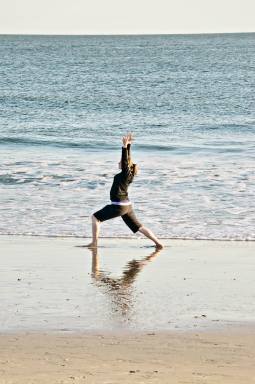
Rox Does Yoga

Yoga, Wellness, and Life

Books: Passage Meditation, by Eknath Easwaran July 5, 2011

Filed under: books,meditation,yoga lifestyle — R. H. Ward @ 3:29 pm
Tags: , ,

Eknath Easwaran’s book Passage Meditation: Bringing the Deep Wisdom of the Heart into Daily Life is a kind, thoughtful guide to meditation for beginners and more experienced practitioners alike. Mr. Easwaran takes the tone of a helpful friend and mentor; the book is an easy read that makes meditation seem doable.

Mr. Easwaran starts by discussing the many benefits of meditation, describing how he came to meditation in the first place as a busy young professor at a university in India. He then details his method for meditation: in essence, to find a passage from spiritual literature that appeals to you and touches you deeply, to memorize that passage, and then to repeat it, word by word, in your mind during your meditation practice. Remembering each word of the passage gives your mind something to focus on. In addition, Mr. Easwaran believes that we are what we think about, and if you spend time thinking about an inspiring passage, that passage will become part of your consciousness, enabling you to become a better person.

You could probably start practicing this simple passage meditation technique just based on my description above, but Mr. Easwaran’s book is so finely written and so pleasant to read that I recommend it strongly.  The rest of the book discusses the benefits of a personal mantra in daily life and of slowing down instead of racing through each day; Easwaran also talks about improving concentration and training the senses (pratyahara), and other just good ideas for spiritual practice, such as putting others first and finding companions to practice with.

Not since reading Thich Nhat Hanh’s Peace is Every Step have I been able to recommend a book of spiritual instruction so highly. I loved this book. It is appropriate for any spiritual seeker regardless of religious tradition, as Mr. Easwaran is conscientious about using inclusive language and making his meditation techniques accessible to all. Mr. Easwaran is well read in the religious scriptures of many traditions and recommends spiritual passages from writers as diverse as St. Teresa of Avila to the Buddha. I highly look forward to reading more of Mr. Easwaran’s work.


Pratyahara and Non-Attachment July 3, 2011

One thing I’ve been thinking a lot about lately is pratyahara, the drawing-in of the senses. When we practice pratyahara, we refuse to let our senses make our decisions for us. So often, our senses will identify something they like and want more of it. That pizza tastes good! I like watching this show! It’s comfortable to relax on the couch! and so we eat more pizza, we watch two more episodes of Doctor Who, and we curl up on the couch for four hours. The problem is not in any one of those things in themselves. It’s fine to eat pizza sometimes, and Doctor Who is probably my favorite show. The issue arises when I’m not making my decision for myself but rather letting my senses make the decision. Two or three slices of pizza is great, but I don’t need to eat the whole pie, and I don’t need to order another pizza tomorrow. When I let myself binge out on something, I’m not consciously making that decision but rather allowing my senses to overdose on things that I like. Practicing pratyahara means that maybe I have some pizza today, but not every day, and I have a side salad or maybe go jogging afterwards; it means that I watch one episode of Doctor Who, but then I get up off the couch and start my evening routine so I can be in bed on time and get a good night’s sleep. If I make decisions consciously, then I will be taking better care of myself.

Non-attachment goes hand in hand with pratyahara. When our senses get used to having their way all the time, they begin to crave the things they like. When I haven’t had any pizza for a few days, I start to feel it. I WANT pizza. If somebody in my office gets pizza for lunch, the smell wafts over and I get all jittery and want it so badly. If I let my senses be in charge, I’d be running for the elevator, walking down to my favorite pizza shop, and trying to justify it because after all I did get the veggie slice. Practicing non-attachment, though, allows me to separate myself from that craving. I take a minute and think, do I really need pizza today? The craving doesn’t run my life, I do not NEED a slice of pizza right now, and I have a perfectly good lunch in the fridge waiting for me.

When we practice non-attachment with the objects in our lives, we can still enjoy things, still go shopping, still have stuff, but all those things don’t run our lives. We’re able to clean out our closets and take the old clothes to Goodwill. We’re able to lend out our books without stressing out about when or if we’ll get them back. If a vase gets broken, oh well, there are plenty more vases. If your husband eats the ice cream you were saving for Saturday, it’s not a big deal. Any one of those things could be upsetting or frustrating, but if you’re practicing non-attachment, you can come at the situation more calmly, with a little bit of distance that allows you to see things more clearly. Your husband didn’t know you were saving that ice cream; whoever broke the vase feels terribly about it. Having a little distance allows you to choose how you’ll react, so that rather than just yelling, you can choose to treat the other person with kindness and make a bad situation better instead of worse.

What are some ways you know to take control of your senses, rather than letting them rule over you? How do you cultivate non-attachment in your daily life?


Meditation progress: five days July 1, 2011

Filed under: meditation,reflections — R. H. Ward @ 9:12 am
Tags: ,

For all of May and a lot of June, things were really up in the air in my life. All the upheaval affected my home practice of yoga in a big way. Even once things began to calm down, I think I still used it as an excuse, a little bit. Also, I typically used to practice yoga at home in the morning before work; now that I’m doing the teacher training program, I have to go to the studio at least once a week, which means skipping my morning practice and going to work early so I can leave the office early and get to the studio. Doing that throws my schedule off for the day, but I’ve also been letting it throw my whole week off.

Last month, I managed to do my pranayama breathing practice almost every day, but I could never get into a rhythm with it; I kept realizing at the very end of the day that I hadn’t done my pranayama yet. At least I was doing it, but I always felt like things would go better if I could have a regular schedule.

For the past five days, I have practiced my pranayama and meditation every morning. I also practiced yoga on four of those mornings. I started the week feeling really pumped up and excited about my commitment to my new schedule. Today I feel less like that.

On Monday, I had taken a personal day from work, so I had a 40 minute yoga asana practice. I worked on some savasana relaxation techniques, did all my pranayama breathing, and meditated for four minutes. Really felt calm and content afterwards.

On Tuesday I squeezed in a 20 minute yoga asana practice, which is better than nothing, did an abbreviated version of my pranayama breathing, practiced yoni mudra (which is a pratyahara thing I’ll post more about later), and meditated for 4:30. I felt distracted during the meditation, like my mind was drifting a lot. I think I might have been trying to shove too many activities into one practice.

On Wednesday I skipped yoga asana because I had to get to work early. Did an abbreviated version of pranayama breathing, practiced yoni mudra, and found that meditation is more difficult without some yoga stretching first, because my back hurt all through my meditation practice.

Thursday, I did 20 minutes of yoga asana, all my pranayama breathing, and tried passage meditation for the first time (based on the book I’m currently reading: basically, you meditate on a brief passage from inspirational literature). I loved it and the time went by really quickly.

Today, I had time to practice, but I only did 30 minutes of yoga asana and an abbreviated pranayama breathing practice. I started off strongly with meditation, but when my alarm went off at the end of 5:30 minutes, I realized I had dozed off. I was still saying my passage in my head, but I was mixing it up with other things and all kind of dreamy stuff was drifting in. I got up from meditation feeling sleepy and heavy and unrefreshed.

This morning, I staggered back to the bedroom after my sleepy meditation, feeling bad and upset and like I would never be able to succeed at this thing. Looking back over my journal and typing it all up now, though, I can see that I had a mostly successful week of meditation: a lot of good experiences.

I think that this week has just caught up with me today. The reason I took a personal day on Monday is because we bought a house and we had our settlement on Monday; we’ve been either been packing or over at the house every night this week. I have slept really well all week, but I don’t know if that’s being tired or if it’s the meditation helping me calm my mind. Maybe a little of both?

My hope for this month is that I can keep up with the good habits I started this week. Mr. Easwaran writes in Passage Meditation that when you are the busiest, you need meditation the most, to help you deal with all the things in your life. He also writes that missing even one day of meditation can really set you back, and that you should persevere and keep at it no matter what happens. So that’s what I’m going to try to do this month. We will be moving into our new house, dealing with repairs and settling in and tons and tons of yardwork, so we’ll see if meditation can carry me through all that.