Rox Does Yoga

Yoga, Wellness, and Life

Avoiding Injuries Through Mindfulness January 12, 2012

A lot of people have read the recent NYT article about how yoga will “wreck your body”. As a brand-new yoga teacher, I obviously disagree with a lot of what the writer says: I mean, I just spent a significant amount of time and money dedicating myself to learning about yoga, which would be kind of a waste if this guy is right. Here are my thoughts.

Of course many people have injured themselves doing yoga. It’s not difficult to do – I’ve done it myself, and so has almost anyone who’s practiced yoga with any dedication over an extended period of time. You can injure yourself hiking or dancing or playing video games or gardening, too, but that doesn’t mean that we stop hiking and dancing and gardening. These are things that feed our spirits, and so is yoga. To single out yoga as an activity that can wreck your body doesn’t make sense, because there are so many other activities that can wreck your body! We humans are equal opportunity wreckers. Accidents can happen no matter what you’re doing.

The key thing, for me, is to keep in mind what the true purpose of yoga is. According to the ancient texts, yoga is a way to get the body healthy so you can then sit in meditation. The point is not to sculpt the body or lose weight or to get a great workout, and people who approach yoga with that attitude (or, with that attitude only) may in the long run be more likely to injure themselves. The point is to be healthy: whatever healthy happens to be for your particular body. And the point of being healthy ultimately isn’t the body at all – we’re working on the body so that we can sit comfortably in meditation. A healthy body won’t be aching and complaining when you sit still for ten minutes. That’s the point we’re trying to get to: improving the body so we can focus on more important things.

Keeping your focus off the body and on the mind can actually help yoga practitioners not to injure themselves. You want to be aware of what’s going on in the body, certainly, and it’s really important to cultivate that awareness of how the body feels and the difference between work and pain. Being mindful of your body is crucial, but it doesn’t do any good to be looking in the mirror or comparing yourself to other students and forcing your body toward something you’re not capable of. And don’t think ahead to what this yoga class is doing for you; keep your mind right in the moment, on your own mat. Stay present and focused on the pose you’re doing right now.

When you take part in any activity, you do your best to be careful and to be mindful of what you’re doing. When you go hiking or ride your bike, you watch where you’re going, but if your mind wanders, your foot can slip or your bike can veer off the path. It’s the same thing in yoga. Staying present and mindful and focused on what you’re doing will help you to avoid inadvertently causing an injury.

Here are a few other responses to the article by nvnehi and anytimeyoga and Michael Taylor. I think it’s interesting to see the very different, thoughtful ways that different yogis have reacted.

 

My Home Practice, Winter 2012 January 11, 2012

Filed under: yoga,yoga lifestyle — R. H. Ward @ 1:25 pm
Tags:

I took a break from yoga for about a week and a half over the holidays. After teacher training I needed the break, and it allowed me to relax, do holiday things, and visit with family and friends without worrying over when I’d be able to fit in my practice. During this break, though, I noticed some changes in myself. Physically, I was more achy, less flexible – I could feel the difference in my body. (I was also more tired and stuffy, although that could be due either to the cold I had or to my pregnancy rather than the lack of yoga.) Emotionally, I felt unsettled. My mind felt much busier and less calm without my meditation practice. I think it was really valuable to take a break just to remind myself that I feel better in just about every way when I’m practicing yoga. F and I made sure to fit in a yoga practice on New Years Day, and it felt great!

Now that we’re back to a normal daily schedule, I thought it might be helpful to write about my current home practice, in the interest of keeping up my practice and improving it while still making allowances for my body’s needs right now while I’m growing a new person.

I typically practice in the mornings. We eat breakfast first thing – I’ve always been the sort of person who needs to eat right after waking up, and now with the baby on the way, mama’s gotta eat. After we clean up the dishes, it’s time for yoga. I need to make my yoga fit in between breakfast and showering so I can get out the door on time for work, so how much time I spend on yoga depends on a number of factors: how late we were up last night, how many dozens of times I had to pee and whether I was able to fall asleep again afterward, how much I overslept when the alarm went off, how long we lingered over breakfast, how well my stomach’s feeling (I’m past my morning sickness now but things are still pretty weird in there, and if my digestive system and I disagree on how to spend this time, then my “seated meditation” will be happening on the john and I just need to accept that). On a good day, I can clock a 30-minute asana practice plus time for pranayama breathing and meditation; on a different day, I might manage two sun salutations and a quick meditation. It is what it is, and I’m doing the best I can.

My yoga practice itself varies. Lately, because it’s chilly in my house in the mornings, I’ve been practicing yoga in pajamas, socks, and my fuzzy pink bathrobe, which isn’t ideal but isn’t as uncomfortable as you might think. I’ve been focusing mostly on sun salutations, because they’re active and they hit most of the major ways of stretching, and they help build strength, which is a big focus for me right now. I do standing and balance poses if I have the time, but I always make sure to fit in some squats, since those are important for my pelvic floor muscles. For seated work, I’ll usually do some of the poses I talked about here. No twists, and really gentle with any forward folds. I like bridge pose for strength but I’m careful with it since my abs don’t want much extra stretching right now. I still do shoulderstand but more often lately I do legs-up-the-wall. I’m looking forward to playing with inversions for as long as I feel able. I usually finish with a short savasana, but sometimes I’ll just hang out in legs-up-the-wall during that time instead.

After my asana practice, I like to do some alternate nostril breathing to prepare for meditation, although with it being winter this is becoming more difficult for my stuffy nose. Then I do a brief meditation, maybe five minutes. I don’t do the same meditation every day but instead choose what seems to resonate with me at that moment.

I still have trouble making my yoga practice happen on the weekends. I like to sleep in a little and then we usually have a busy day planned, so it’s hard to make sure I get my practice in without the routine of the weekday. If anyone has any advice on this, let me know.

I hope this post was helpful to those of you who imagine me as SuperYogaGirl. I try to have some sort of practice every day, but I’m not nearly as regular about it as I wish I was, and I definitely am not SuperYogaGirl, although I wish I could be. And now you can picture me flopping around doing downward dog in my scuzzy bathrobe, which is a lot more realistic than what you might have imagined before!


Rox Does Yoga: now on Facebook! January 10, 2012

Filed under: Miscellaneous — R. H. Ward @ 1:13 pm
Tags:

Just a quick post to let you know that Rox Does Yoga is now on Facebook! Go and like it!

(This is also a test post to make sure that blog updates are now automatically feeding to the new Facebook page.)

(edit: It totally worked! All systems go!)


2012: Year in Preview January 8, 2012

Last week, I looked back at 2011 to assess my progress and see how far I’ve come. Now it’s time to think ahead for the new year.

I definitely want to continue to pursue my yoga, to build myself as a business, to maintain the skills and knowledge I’ve built in the past year and keep growing. Here’s what I have planned:

  • Get registered with Yoga Alliance. (I started on this, and all I need to do to finish is to scan a copy of my graduation certificate to PDF, which I can hopefully get done this week.) After registering, look into yoga teacher insurance.
  • Turn this blog into an official website with a schedule and more information about me. Start a Facebook page for RoxDoesYoga separate from my personal FB to make it easier for yoga friends and potential students to find me.
  • Keep up my ties with EEY, the yoga center where I completed my training, by attending hatha yoga class there at least once per month. I also hope to attend any special events or workshops that come up, and teach as a sub there as opportunities arise.
  • Reach out to new studios and make connections with other local yoga teachers by attending at least one new yoga class per month. I’d love to start building a new yoga community a little closer to home than EEY and look into teaching opportunities with other yoga centers.
  • Keep teaching my weekly Front Porch Yoga class for private students at my home, at least for the next few months. This class will continue to be free, since these students are my friends and their interest in yoga and continued dedication to showing up at my house has provided me with invaluable teaching experience. For now, I really want to stay in practice as a teacher and not lose my confidence, and continuing the free Front Porch class will help me do that.
  • Begin exploring other yoga teaching opportunities. This is a little more vague, since I’m not sure what’s out there. Some ideas include teaching a discounted class for my neighbors at our town community center, or seeing if the dance studio in the next town over might be interested in starting a yoga program.
  • Continue to challenge myself with reading books on yoga and meditation, with a goal of one yoga-related book per month. Contact Yoga Journal and other related magazines to look into writing book reviews for publication.
  • Maintain my personal yoga practice. My goal is to fit in some sort of practice every day, whether it’s an hour-long class or three sun salutations. I want to work on practicing pranayama and meditation daily.
  • Continue this blog by posting 2-3 times per week. I figure all the goals and plans I’ve listed here will give me plenty to write about!
  • Look into and begin researching prenatal yoga.

Yeah, prenatal yoga. Because here at the yoga blog we’re expecting a yoga baby! For me, this makes the goals above even more important. I need to keep up my personal practice to get ready for giving birth and to keep my body healthy and strong as my pregnancy progresses. I need to rededicate myself to pranayama and meditation, in preparation for the birth but also to help me become the kind of mother I want to be. And I don’t want to give up my yoga dreams in the midst of fulfilling our dream of having a child. The baby’s scheduled for a July debut, so of course these plans and goals will get sidelined for a while mid-year, but I want 2012 to be a year with room for all the dreams.


2011: Year in Review January 5, 2012

Filed under: checking in,reflections — R. H. Ward @ 6:47 pm
Tags: ,

With the new year, I always like to take a little time to consider the year that’s just passed. Most of you know that 2011 was a big year for me. I started the year with the hope that I’d look into yoga teacher training programs, maybe buy a house with my husband, and try to write more. I managed to complete all of these things.

I not only looked into teacher training programs, I found one I liked, signed up, worked hard, and graduated. This fulfilled a goal I’d had for over five years, and I feel really proud not just of graduating, but of how hard I worked in the program and how much I learned, how much I drove myself to learn and make the most of the opportunity. I managed this even while my husband and I were buying our first home, moving and settling in. This was a huge step for us as a family, and all of it – from house shopping to inspection and settlement to moving and doing yardwork and making repairs – has been exciting, sometimes difficult, and usually time consuming. Yoga teacher training and the house together made this a big, challenging, and rewarding year.

Another major part of this year has been this blog. I started the blog in March 2011 with the idea that it would give me an outlet for my writing during a period when I wouldn’t have much time for my poetry and creative work, and that it might help me keep up with my teacher training homework assignments. Since then this blog has grown, and I’ve been really happy with how it’s helped me to work through many of the issues and lessons of this past year. I never really expected that many people would read this blog, but lots of you have found me, and getting to know you has been, well, really neat. It’s meant so much to me when you tell you’re out there reading this, that my words touched you or helped you or inspired you or just made you laugh. You’ve kept me honest and dedicated when I might have slacked off. I started this blog for myself, but now it’s just as much for you. That’s pretty cool.

For the new year, WordPress sent me some interesting blog stats that I thought I’d share. I made 198 posts: almost 20 posts a month, so on average I achieved my goal of posting 3-5 times per week. This blog was viewed 11,000 times, which isn’t insane or anything but sure isn’t bad for the first year. I’m kind of fascinated that a lot of people found my blog by searching for “yoga gorilla pose”. The full report can be viewed here.

Next time, I’ll look ahead to 2012 to plan and imagine what’s next for this blog and for me, in life and in yoga.


Happy Holidays December 23, 2011

Filed under: Miscellaneous — R. H. Ward @ 9:22 pm

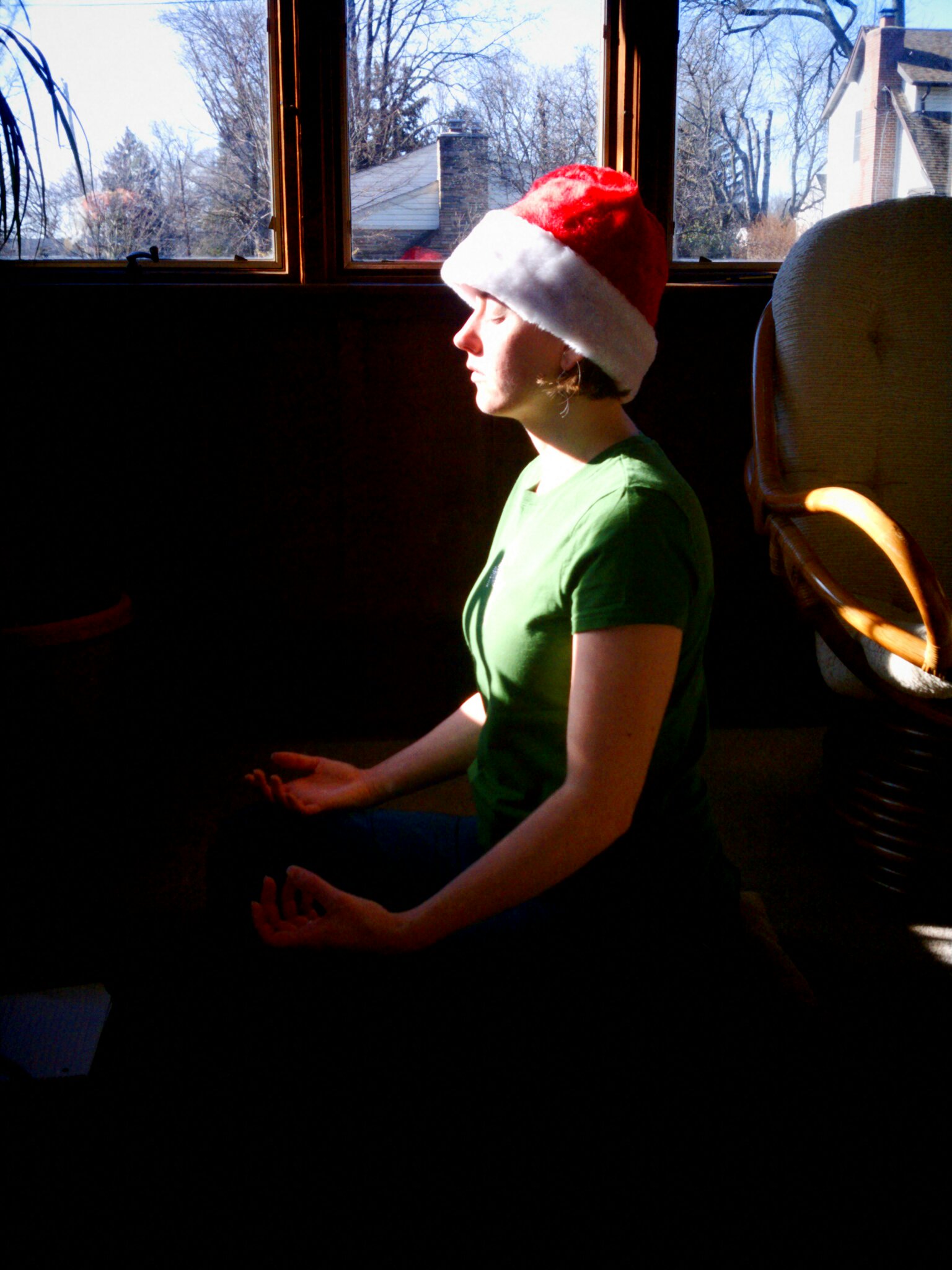
Christmas Yogini

From my mat to yours, and from my heart to yours, have a bright, safe, happy holiday! No matter what holiday you celebrate, or if you choose not to celebrate at all, I hope you’re able to find joy and peace this season.

I’ll be taking a short break from the blog, but I’ll be back in 2012!

(I also want to say that the photo at left here is not posed in any way. My husband F and I were about to shoot our holiday card photo, and it was taking him forever to set up the tripod, so I thought I’d get my meditation in. He snuck up on me and took this picture. I like it!)


Yoga Book Recommendation List December 22, 2011

Filed under: books,yoga — R. H. Ward @ 2:17 pm

At our last yoga teacher training session, each trainee shared a brief review of a book we’d read. Here for your reading pleasure, then, is a yoga book recommendation list! (Please note, I haven’t yet read any of these books myself – my notes and descriptions are based on my colleagues’ reviews.)

The End of Sorrow: The Bhagavad Gita for Daily Living, Volume 1, by Eknath Easwaran: This version of the Bhagavad Gita includes Eknath Easwaran’s commentary on each verse. My friend found it to be very relatable.

The Bhagavad Gita with commentary by Mahatma Gandhi: Gandhi loved the Gita and strove to live his life according to its principles. The commentary collected here is very detailed, intellectual, and comprehensive, but written such that it’s understandable for ordinary people too. (My friend noted that her edition was published in India and didn’t seem to have been edited or even glanced at by a native speaker of standard English, but once she got past the typos she couldn’t stop reading.)

The Ramayana: The ancient epic poem of Rama, a story of love, duty, and dharma, was another of Gandhi’s favorites, and was recommended by one of my teachers.

The Pure Heart of Yoga, by Robert Butera: A good overall look at yoga. Topics covered include the eight limbs of yoga, a nice summary of the chakras, and some interesting discussion of yoga psychology complete with case studies.

Job’s Body, by Deane Juhan: This is a bodywork text required by many schools for massage therapy, acupuncture, etc., but the detailed anatomy is also useful from a yogic perspective. My friend was really impressed with this book.

Yoga Bitch, by Suzanne Morrison: A cute and funny memoir about a woman who undertakes a yoga retreat that wasn’t what she was expecting.

Be Young with Yoga, by Richard Hittleman: My friend chose this book to read simply because it had been sitting on her family’s bookshelf for as long as she could remember. Originally published in 1962, Hittleman was ahead of his time in promoting the physical and spiritual benefits of yoga in the US. He wrote many books, and it looks as though some of these are still being reprinted today.

Goddess to the Core, by Sierra Bender: This book explores spiritual, emotional, mental, and physical aspects of the body, particularly in relation to healing. It includes yoga asanas and pranayama breathing but discusses many other tools as well. My friend described this book as intense, deep, and woman-centric.

Living Your Yoga, by Judith Lasater: The goal of this book is to help people live yogically 24/7, in touch with the benefits of yoga not just on the mat but in every moment of life. The book includes practical strategies for keeping up the drive and discipline to practice yoga day to day.

Happiness is Your Creation, by Swami Rama: Two of my classmates happened to read this book, and it’s highly recommended by one of my teachers as well. Swami Rama (also author of The Royal Path) discusses the yamas, niyamas, and meditation here as well. This book teaches that happiness shouldn’t depend on successes or failures but is real and vibrant within each of us. (My friends talked about this book so effusively and enthusiastically that their sheer joy in it almost made me skeptical that it could be that good – as if they’d been drinking the Swami Rama Kool-Aid – especially since I was not all that hot about The Royal Path. However, each person gave several real examples of how the book had helped her in her life, which convinced me enough that I think reading it will be worthwhile.)

God Makes the Rivers to Flow, by Eknath Easwaran: This is an anthology of sacred poetry and prose from around the world. Inspirational in itself, this is also a great book to have on-hand if you’re looking for a meaningful passage to use in meditation.

Inner Quest, by Pandit Rajmani Tigunait: Another one highly recommended by my teacher N.

If you still want more book recommendations, check out this amazon list compiled by the teacher of my friend Rambling Yogini! Some great and completely different selections there! (Personally, I really want to look up The Hindus: An Alternative History, and Donna Farhi’s book on Teaching Yoga has been on my list for a while now.)


books: The Joy of Living, by Yongey Mingyur Rinpoche December 20, 2011

Yongey Mingyur Rinpoche’s The Joy of Living: Unlocking the Secret & Science of Happiness is an excellent and informative book and a good practical manual for meditation. A wide variety of meditation techniques are discussed, in language that makes them accessible to even the most un-Buddhist of readers. Mingyur (Rinpoche is an honorific given to respected teachers) is a kind and encouraging teacher; his writing style is very natural and conversational, helping you feel as if he’s right there beside you to help along the way.

The book is divided into three main sections. Part One: The Ground begins by describing Mingyur’s early life and training in meditation and his journey toward overcoming anxiety. He’s an engaging storyteller, and it’s comforting to hear that even a monk who grew up meditating from childhood can still struggle with his mind. This section also discusses the connection between the ancient Buddhist practices of meditation and modern advances in neuroscience, physics, and biology. Raised in isolated monasteries, Mingyur is fascinated with Western science and has worked with many scientists to learn about the brain’s workings and the structure of the universe and compare them with the Buddhist understanding of the mind and reality. While interesting, this area was not as strong as other sections – these discussions could have benefited from a scientist coauthor to help refine and make specific Mingyur’s comparisons. However, Mingyur does make a good case for meditation as valuable and needed in the West, and his ideas here are well worth reading.

In Part Two: The Path and Part Three: The Fruit, Mingyur is at his best, carefully walking the reader through the basics of meditation. He provides a firm foundation for beginners, with examples from his own history as guidance. Beyond the basics, he details a variety of different meditation techniques that will appeal to new and experienced students alike. He asserts that it is the intention to meditate that is most important, not the actual time spent on it or whether your mind wanders off in the middle. Mingyur strives to make meditation available to everyone.

I began reading this book back in February 2011 and just finished it this month, but the long reading time is due to my own crazy schedule this year, not any failing of Mingyur’s. I’ve actually posted about this book on several other occasions because as I read I found his words so encouraging and insightful. I highly recommend this book to anyone hoping to begin or deepen a meditation practice.


Books: Karma-Yoga, by Swami Vivekananda: My Response December 13, 2011

I recently summarized and commented on Swami Vivekananda’s book Karma-Yoga. Although the book is based on lectures given by Vivekananda over a century ago, it feels incredibly relevant and important to me today, and I wanted to comment on what touched me so much about this book and what seemed so important about Vivekananda’s words on work and duty.

First, I identify as a Karma yogini (which is why I chose this book to read rather than Vivekananda’s books on Jnana yoga or Bhakti yoga). I feel that the ideals of karma yoga that are outlined in the Bhagavad Gita are really beautifully explicated in this book; the Gita tells us to be unattached and to work without regard for the results of our actions, but Vivekananda begins to explain how we’re supposed to manage that. He sets the case for Karma yoga as the yogic path that is most accessible to anyone – a Jnana yogi has to study and use logic and intelligence, a Bhakti yogi relies on love and devotion, but a Karma yogi mostly just has to show up, and keep showing up. I have always had a high regard for the virtue of showing up, whether it’s for work, for appointments and events, for classes and study, or, on a larger level, showing up for your life. If you think about it, a lot of people don’t put in the effort to show up for life, not truly. Many people coast along, just getting by, then wake up when they’re 50 and wonder what the heck happened. A Karma yogi makes a commitment to show up every day and be truly present in the work they do.

This book gave me a way of looking at my own life that really meant a lot to me. I’ve received a lot of blessings in my life, I’ve worked really hard, and I’ve also been incredibly lucky. My life is pretty fantastic, but just like anyone, I have parts of my life that are less than ideal. This book gave me a window into how to negotiate my way through those things. For the past five years, I’ve worked in a job that I don’t particularly like. Sometimes I get angry about that, or frustrated, or all worked up; I’ve tried to combat that by reminding myself how lucky I am to have a job at all, let alone a job that pays well, with good health insurance, with colleagues that I like and respect. Reading this book has given me another way to manage my day-to-day frustrations. I’ve started trying to treat my job as my Karma-yoga duty, at least for right now. I have a family to support and a home to maintain, and it’s my duty to go to work and to do my very best while I’m there. By getting worked up and frustrated about my job, feeling trapped by my job, I’m just getting more and more attached to it. If I practice non-attachment, the work goes more quickly and it affects me less. I’m able to leave my work at the office more readily, which allows me to more fully enjoy my home life, which is what really feeds my spirit. This doesn’t mean that I give up on the dream of finding something that suits me better, but it does mean that I feel more peaceful in my day-to-day life. Feeling more peaceful means that I have more of myself to give to my family (and I whine a lot less), and I’m better able to do my work when I’m at the office.

When I read the Bhagavad Gita, I understood the concept of Karma Yoga, but it never really clicked to me how to make that an everyday part of my life. I thought of the larger scale implications of Karma Yoga, but not the small scale ones. Reading Swami Vivekananda’s book has really helped me to understand this better and to apply it to my own life. I’m only at the start of this practice, but just reading the book gave me a great sense of relief, and the lessons that Vivekananda teaches are ones that I want to cultivate.


December Training Weekend: Graduation Wrap-Up December 12, 2011

Filed under: reflections,teacher training,yoga lifestyle — R. H. Ward @ 2:18 pm
Tags:

My weekend was a lot more emotional than I was expecting.

Friday night, we spent some time checking in and figuring out what had gone wrong with communication about our group’s end-of-YTT celebration. Different people had had different things in mind for our celebration, and, not knowing that the others were planning something else, moved forward with reservations and such. The spirit behind the problem wasn’t the problem: everyone just wanted to make sure that we all had a chance to celebrate together. Things just weren’t communicated as well as they needed to be, which resulted in frustration, disappointment, and hurt for a few people. We talked it all over and cleared the air, and then proceeded to plan on having modified versions of both celebrations, which was really the best of both worlds.

We then spent some time Friday night talking with N about the business end of yoga teaching: what to charge, how to charge, where to teach, what do we need to worry about in our non-compete clause, whether to register with Yoga Alliance (short answer: yes, definitely), whether to get liability insurance (again: yes, definitely), how to react to emergency situations, and other aspects of the business. This was really useful and we all had questions to ask and things we were wondering about. After Friday night’s class, several of us went next door to Sukho Thai for Celebration # 1. A few people brought wine and since the restaurant was almost empty except for us, we really had a chance to relax.

On Saturday morning, I attended the 10:30 all-levels hatha yoga class with several of my classmates (my last opportunity for complimentary yoga!). After lunch, we started on the afternoon’s classwork. First, we talked with J about some different issues with being a yoga teacher: how to react to and deal with students. J talked about his long experience in working with different students, and it was really informative. Every person brings something different to yoga class; different people want different things, and there are often students who came with a friend who don’t really want to be there at all. J talked about strategies for working with difficult students and not taking things personally. Then N arrived and we played our last Yoga Jeopardy game. J was Alex Trebek/Vanna White again, and again did a fantastic job. My team somehow ended up with all the hardest questions, but overall our group did really well and got almost all the answers right (and really, who needs to know the Sanskrit name for candle-gazing anyway?).

After Jeopardy, N and J held our graduation ceremony. It was very simple: each new teacher came up to the front of the room and had a chance to say a few words if she liked, and then N and J presented her with a certificate. We all choked up several times as each person spoke about how meaningful this training had been and how much we’d learned from each other and from N and J. After graduation, our spouses, friends, partners, and kids began to arrive for Celebration # 2. N had picked up some cookies and pound cake from Whole Foods, and we shared tea and snacks and met the people our classmates had been talking about all this time. I was still feeling really teary from graduation, so I clung onto my husband F perhaps more than necessary. We all said our goodbyes and cried some more, and then F drove me home.

When I was first planning to do a yoga teacher training, I was thinking of it as a requirement to fill, a piece of paper to achieve. I am very good at school and at filling requirements. I knew I wanted to teach yoga, and this was the credential that would allow me to do that. I was not thinking of a yoga teacher training program as a transformation or a journey. Yoga teacher training isn’t like taking a course on web design or something; it’s not just developing some specific skill. It includes that, but that’s not all it is. When I began this program in March, I was not a yoga teacher. Now I am one. The piece of paper I received this weekend isn’t what makes me a yoga teacher, it’s just a recognition of what’s happened: I am a different person now than I was ten months ago. I think this is part of why this weekend was so emotional for me. I wasn’t just receiving a certificate, I was acknowledging a major transformation in my life and the end of a process that’s meant a lot to me. This weekend also marked the beginning of something new as I look ahead to what may be next for me as a teacher. I was also saying goodbye to a group of people I’ve come to love – even though I may see them again at the yoga center, and some of them I may even see often, we won’t really be together in the same way again. These are big, emotional things.

I just want to say here that I really appreciate everything that N and J have done for us, and everything I’ve learned from my classmates. I also want to say that I appreciate all the support and love that F has given me throughout this process. He never said no, he never complained, he just made room for more (more yoga classes; more time for me to do my homework and write papers and work on the blog; more people in our house at my home yoga class every week, and even more beyond that), and he always made it a priority, because it was important to me. I feel incredibly grateful for the gift of the past ten months.