Rox Does Yoga

Yoga, Wellness, and Life

Thursday Night Class and Teaching Practice July 30, 2011

Filed under: reflections,yoga — R. H. Ward @ 8:07 am
Tags: ,

Thursday night’s yoga class was really great. J tapped Nancy and me to teach some poses. It was technically a beginner level class, but J looked around and everybody in the room had some yoga experience, so he said we could teach it more as an all-levels class, so a little less description, less worry about just getting people into the pose, and actually doing and demonstrating the poses ourselves instead of walking around.

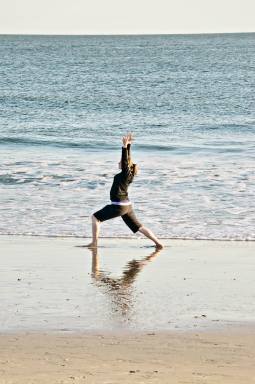
Initially I was pretty nervous, since I hadn’t taught in almost two months, but then I got excited. Nancy taught sun salutations – she has a lot of anxiety about teaching, but I thought she did a good job, some of the best teaching I’ve seen her do. Then I taught standing poses. I did a sequence starting with warrior 2, into radiant warrior, then triangle, revolved triangle, and then half moon for the balance. Best I could come up with at the time – I had been thinking I’d start with warrior 1, but Nancy did a lot of lunges in her sun salutations, so I figured we’d kind of worked those muscles. I was nervous at first and was only able to get out the basic instructions, but as we went on I got more confident and was able to say more, use my own words a little more. It ended up being really fun. Any time I teach, I start out nervous and then just want to go teach more.

After class, one of the students, a guy in his 50s probably, came up and told Nancy and me that we’d done a great job, and he appreciated having to be on his toes not knowing what pose would come next. We had a nice chat with Bob and then J sat down to do a little teaching post-mortem with us, wanting to know how we felt while we were teaching and how it was for us. He didn’t give us feedback on our teaching, because I think at this point he just wants us to practice doing it and make our mistakes and know that it’s fine. Then the three of us stayed for a good hour and just had a conversation about yoga and the Bhagavad Gita and India, where J spent 2+ months in an ashram several years ago. It was good because, as I told Nancy afterwards, I feel like we’re getting to know J a little more as a person. He does this wise yogi thing in class, and it’s hard to get at who the real person is under that, but I’m starting to see his energy and personality and emotion a little more. I got home late on Thursday, but it was really time well spent.

 

So You Want to Try Yoga, Part 1: Know What You’re Looking For July 26, 2011

Filed under: yoga — R. H. Ward @ 1:41 pm
Tags: , ,

A few months back, my mom sent me an article clipped from her local newspaper on how to find the right yoga instructor. It’s a subject I don’t even think about anymore for myself, but choosing a yoga class can be really intimidating to a beginner! Here are some tips to help you get started on your yoga journey.

  • Know what you’re looking for.

People keep telling you how awesome yoga is, and you’ve decided to give it a try – great! But what are you hoping to get out of it? When you hear the word “yoga”, what does that call up for you? A hardcore workout, a spiritual practice, or something else? Are you looking to get in better shape, or trying to bring some calm to your busy life? Are you recovering from an injury, or do you have a physical condition that limits your movement? The beauty of yoga is that it can be all of these things, and it can work for any body type, any level of physical ability, but you should take your needs and limitations into account when choosing a yoga class. If you’re already fit and just looking for a workout, you won’t find it in a gentle yoga class, and if you’re out of shape or limited in your movement, a fast-paced class could be too rough. Understanding what you want out of a yoga class before you start looking for classes will help you narrow your search.

Too often, when we’re starting to build a healthy new habit, we find ways to talk ourselves out of it and remain set in our old ways. I once knew a guy who paid for a gym membership for a full year without ever going to the gym – he had every intention of getting back in shape, but he couldn’t commit to the changes in his daily routine (like packing a gym bag, or taking a short lunch and leaving work a little early) that were necessary to make that happen. It is hard to make these sorts of changes! Trying a yoga class is ideally the first step in breaking an old habit and starting a healthy new habit. You don’t want to give yourself any reasons or excuses not to do it! So take a few minutes to decide what you want out of your yoga practice. It can just be something simple, like “getting in shape”, and it can change with time as you learn more about yoga, but having a basic idea of what you’re looking for will help you choose the kind of class you want. If you go to any ol’ yoga class, it might not be what you’re looking for, which will make it easy to say “Oh, I tried it, but yoga’s not for me.” Well, that class might not be for you, but there are many different types of yoga classes! Try to identify what you want up front, and then choose a class that seems appropriate for your needs.

If you’re looking for a great workout, try vinyasa or ashtanga style yoga: these styles keep you moving! Or try Bikram yoga, or any yoga class that says it’s taught in a hot room. A yoga class at a gym will often be heavier on the fitness component, too. If you have an injury or a movement-limiting problem, try looking for a class labeled yin, gentle, or restorative yoga – these classes will move slowly and often use props to make sure you’re fully supported. When in doubt, look for a beginners or basics class, as this should be appropriate for anyone, no matter how nervous or out of shape.

And then (and I shouldn’t even have to say this), go to the type of class you’ve identified as being what you want. It’s really easy to say, “Oh, the beginners class is at 6:00, but a 7:00 class fits my schedule better, so I’ll just try advanced acro-dance yoga instead.” Don’t set yourself up like that. Sure, you might discover a surprising love for acro-dance yoga, but more likely you’ll be in over your head and unhappy. Know what you want, and then go do what you want to do.

Now that you have an idea of what you want to get out of yoga, next time I’ll talk about  ways to find some yoga classes in your area to try!


Pose of the Month: Bridge Pose July 25, 2011

Filed under: Pose of the Month,yoga — R. H. Ward @ 2:35 pm
Tags: , ,

Pose Name:

Bridge Pose

Sanskrit Name:

Setu Bandha Sarvangasana

Steps:

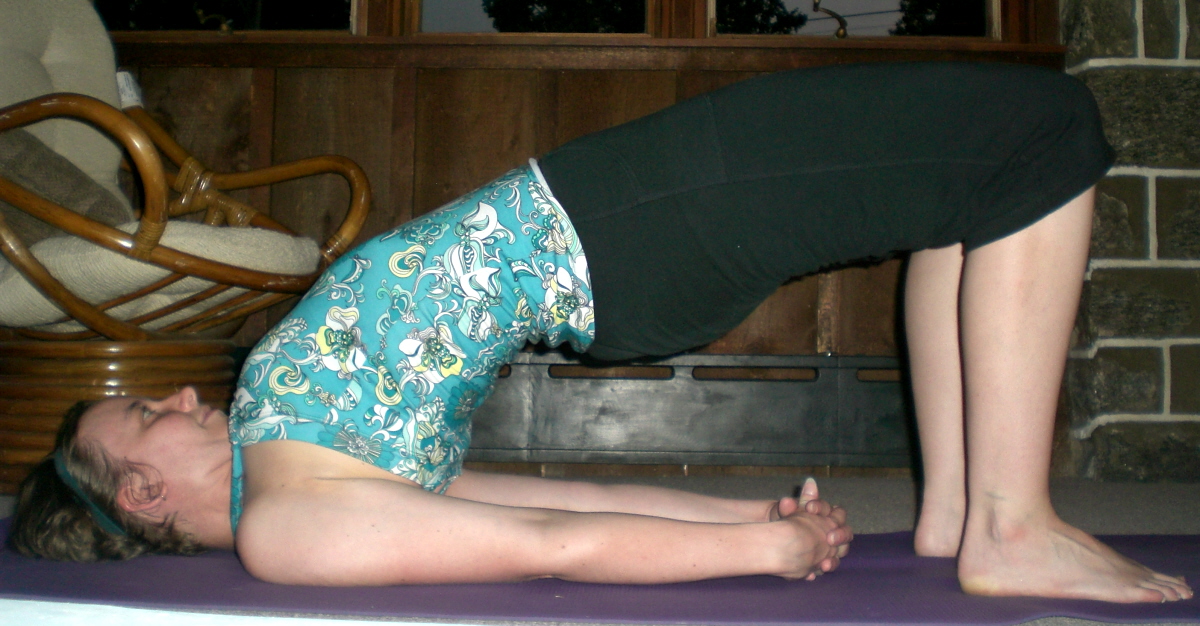
  1. Begin by lying on your back on the floor.
  2. Bend your knees and place your feet flat on mat. Skootch your heels as close to your tush as you can.
  3. Tuck your chin.
  4. On an inhale, press your arms and feet into the floor and lift your hips into the air.
  5. If you wish, you can grab the edges of your mat with your hands, or you can clasp your hands under your back, rolling your shoulders under to open the chest even more. You can also lift your hands to support your lower back, pressing your upper arms into the floor.
  6. Continue lifting and extending the hips as high as you can. Keep the legs and feet parallel. Don’t forget to breathe!
  7. Exhaling, unclasp your hands and gently lower down to the floor. Hug your knees into your chest.

Benefits:

Bridge pose is a backbend, stretching back muscles and helping to relieve back pain, as well as a chest opener, stretching the muscles of the chest, which can improve and expand breathing. Bridge also works the muscles in the tush and abdomen. The pose stimulates abdominal organs and can improve digestion.

Counterindications:

Those with back injuries may want to avoid this pose. Those with neck injuries may want to place a folded blanket under the shoulders to protect the neck and should only practice the pose under an experienced teacher’s supervision.

My Experience of Bridge Pose:

I’ve practiced bridge pose for many years now, and my practice has grown and changed with time. When I lived in Boston, my teacher there emphasized working with the pose dynamically, coming into and out of it repeatedly. We would often do 20-30 repetitions, as if we were doing situps or pushups. Since moving to Philly and taking up a classical hatha practice, I’ve now learned to hold Bridge pose for several breaths. The two practices lead to very different experiences of the pose! I enjoyed working with Bridge athletically, and at first I resisted staying in the pose for a longer time; now I can appreciate settling in to the pose and feeling the stretch through my chest and back. I enjoy the calm, pleasant feeling I get when I practice Bridge pose.

Bridge Pose


Relaxation Sequence July 22, 2011

Filed under: yoga — R. H. Ward @ 2:37 pm
Tags: , ,

For last month’s homework, I had to prepare a relaxation sequence – the sort of thing I’d say out loud during savasana at the end of a yoga class. Here’s what I came up with. Feel free to imagine me saying this aloud in a calm, soothing voice.

Let’s start getting ready for savasana: do any last pose or twist you need to do, then come down to lie on your mat. Make sure you’re warm enough, arrange your clothing so nothing’s bothering you, and we’ll prepare the body for relaxation.

First, flex your feet: curl your toes, really tense the feet… and relax them.

Now tense your legs: engage your calf muscles, squeeze your thighs, really tighten… and relax.

Tighten your tush, squeeze it hard, really flex… and relax.

Now squeeze your belly, tighten your abs, pull it really tight… and relax.

Curl your hands into fists, squeeze them hard, flex the arms, tighten the arm muscles, push… and relax.

Pull up your shoulders, squeeze them up toward your ears, really press hard… and relax.

Now squeeze your face: scrunch up your nose and mouth and forehead, really squeeze… and relax.

Release all the tension from your body, and feel your whole body relax. Feel the floor holding you up. Let your body be heavy; let yourself just sink down into the floor and rest. Let your mind rest too: just watch your breath move in and out, in and out. Let all your worries go for just a few minutes and luxuriate here.

Savasana

I’d give the students several minutes to relax in savasana. Then I’d invite them to begin to bring movement back to the body – wiggling fingers and toes – and to roll onto one side, then up to a comfortable seated position. After a moment of meditation, we’d all say “namaste” and the class would be over.


July Teacher Training Weekend: Saturday (and a little Tuesday) July 20, 2011

Filed under: teacher training,yoga,yoga philosophy — R. H. Ward @ 2:19 pm
Tags: ,

At Saturday’s teacher training session, we spent lunch and a little class time on one-on-ones, so J & N could meet with each trainee individually to see how we’re doing. The one-on-ones lasted longer than planned, so some of us had to wait and do ours during the week. (I had mine last night, Tuesday, after class, and got to enjoy a really good conversation with N that helped me clarify that, yes, I’m on the right track; yes, I’m doing the best I can right now and once things calm down in my life my practice is going to take off; and yes, I should talk more in class; and yes, my papers are really good, but you all knew that part already because you’re basically reading my papers all month long. N also says she needs to see me teach more, which I totally understand, and that I am to thwack her in the head and remind her next time I’m in one of her classes so that I can teach a pose. I told her about my practice class at the pond and she was really glad to hear that I’d done that. Again, I’ll be trying to bank some teaching practice at home once we’re more settled in to our new house. Can’t fit more than one yogi on the porch right now since there’s still a queen-sized box spring sitting on it. Which reminds me, does anyone need a queen-sized box spring?)

Our actual class lecture on Saturday was Intro to the Bhagavad Gita. We talked about the four paths of yoga:

  • Karma Yoga: the path of action
  • Raja Yoga: the path of meditation
  • Jnana Yoga: the path of wisdom/knowledge
  • Bhakti Yoga: the path of love/devotion

We also discussed the three gunas. Guna means “strand or quality”; the gunas are three moods or influences or qualities that affect pretty much everything that happens:

  • Sattva: peacefulness, calm, contentment
  • Rajas: activity, sensuality; full of desires, attachments, and enjoyments
  • Tamas: confusion, laziness, lethargy, ignorance

The four paths and the three gunas are discussed in depth in the Bhagavad Gita, which is our reading assignment for this month. You can probably all predict that you’ll be hearing a lot more about these things later this month. We also talked about karma and about the four duties of a yogi, which I’ll describe further in a later post too.

My homework for this month is to read the Bhagavad Gita and write a reflection paper on which yogic path seems to suit my personality the best, including why I think that, what about that path resonates for me, and what evidence in my life leads me to this conclusion. We’re also doing two posture write-ups this month on twists (any ol’ twist: seated, standing, or reclining). It seems like a light homework month, but I think the intention is really for us to focus on the Gita and the four paths and to think carefully about it.

I already owned a copy of the Bhagavad Gita: Stephen Mitchell’s translation. The rest of the class is reading Eknath Easwaran’s translation. At first I figured, I already have the book, I don’t need to buy another copy, but now I’m reconsidering. First, I absolutely loved Easwaran’s Passage Meditation, so I would be very interested to see his take on the Gita. Also, given that we’re being provided the time to do some real hard work on this, I think it might benefit me to read the thing twice. I’ve already started on the Mitchell translation (just finished chapter 3, I think), and I’m a fast reader, so I’ve got plenty of time. It seems like, of all the books on yoga and spirituality out there, the Bhagavad Gita is one that it might be nice to own two translations of.


Yoga in the News: Good Posture July 19, 2011

Filed under: Miscellaneous,yoga — R. H. Ward @ 2:34 pm
Tags: ,

Here’s an interesting article from Boston.com about good posture. According to the article, people who sit slumped over a laptop all day, or who simply sit all day, are at risk for developing curved spines and other problems. However, there’s hope: as we all know here, yoga is excellent for improving posture. The article cites a study where elderly people with curved spines either attended a one-hour yoga class once a week or didn’t. The group who went to yoga had much improved posture at the end of the study. The article also recommends tai chi, which involves slow, deliberate movements, and pilates, which works the abdomen and core muscles, to improve posture.


July Teacher Training Weekend: Friday night, teaching practice July 18, 2011

Filed under: teacher training,yoga — R. H. Ward @ 2:16 pm
Tags: ,

At Friday night’s teacher training session, we spent a lot of time on our monthly check-in, so that each person would have the opportunity to talk about their meditation experiences this month. After check-in, we worked on teaching practice.

We broke into two groups: five of us with N, and six with J. I was in N’s group, and working with her was really different from practicing teaching with J. We went through a basic class structure – she had one student teach a pose, then she’d talk with us about positive things she’d observed and other things to try next time, then another of us would go and then we’d talk over what that person did. This was useful because J will often remind us of things when we practice teaching, or correct us when we get something wrong, but N made a specific point of highlighting things that each person did right. That’s helpful for both the person doing the teaching and the rest of us, to know that Miriam made a good point when she said this or that Gillian had a nice way of phrasing that. A couple of people in our group weren’t too confident in their teaching, so highlighting what they did well helped to reassure them; I tend to be overly critical, so it also reminded me that each of us had smart, useful things to say.

The thing N mentioned that she liked about my teaching was my voice. She said that I have a good, soothing yoga voice. Then she went on to give some strategies for what you can do if you don’t have that kind of voice: you should never fake your voice, but you can pay close attention to your tone and modulate your volume. I really liked N’s approach here: she was able to tell me something positive, and then use that as a teaching moment to help others develop their skill.

I taught two things: sun salutations, which I feel pretty comfortable with, and shoulder stand. I volunteered to teach shoulder stand and told N it was because I’d never tried teaching it before. Teaching shoulder stand was a different, unique challenge. With many yoga poses, the teacher should tell you how to do it and then shut up and let you have an experience; shoulder stand is different because a student can actually seriously harm herself in this pose, so it’s better to teach through the whole thing, continuing to talk so that the student can learn more about the proper alignment. I got some things right (use your hands to support your back; don’t let any weight rest on your neck; try to bring your elbows parallel to each other) and missed some important things (your hips should be square above your shoulders; your back should be perpendicular to the floor; and I said that your weight should be in your shoulders, but I neglected to say that your weight should be in your upper arms too). And hearing N talk about the pose afterward was really helpful. (N told us that this will be a pose that we will be required to write up later on, so you’ll hear more about this in the future.)

Overall this might have been my favorite practice teaching session. The other group, working with J, did not have such a nice time, which made for an odd energy in the room; the other group had some people getting upset and some people getting angry, but my group was very pleasant and very supportive. I’m not sure how this can be avoided in the future. Maybe next time we’ll keep the same groups but swap teachers, which could be enough to mix things up.


Pose of the Month: Cobra Pose July 17, 2011

Filed under: Pose of the Month,yoga — R. H. Ward @ 2:14 pm
Tags: ,

Pose Name:

Cobra Pose

Sanskrit Name:

Bhujangasana

Steps:

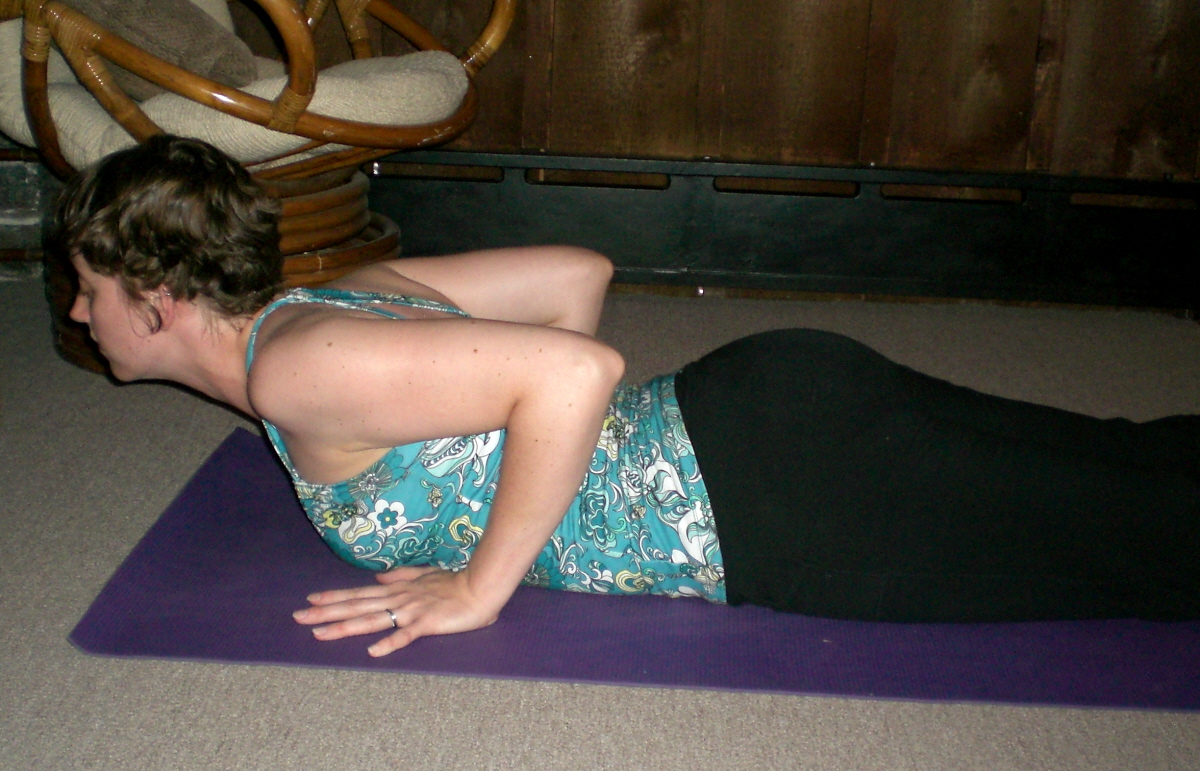
Cobra pose is frequently practiced as part of the classic sun salutation sequence. If you are practicing cobra during sun salutation, you’d move through the sequence until you come to plank pose, then gently lower your belly down to the floor. Cobra can also be practiced independently: begin by lying on the floor on your belly.

  1. Place the hands lightly on the floor, palm down, under the shoulders. Hug the elbows against the body. Legs are active but relaxed, with the tops of the feet resting on the floor.
  2. Press the legs firmly into the floor. Using only your back and abdominal muscles, lift your head and shoulders off the floor.
  3. Press your shoulders back, opening your chest. Check on your elbows, making sure they are tucked back, keeping your forearms parallel to each other. Close the eyes or gaze at an unmoving point on the floor in front of you.
  4. All the effort of the pose should be in the back, not the arms – you should be able to lift the hands up off the floor.
  5. For a deeper variation, press through the hands, begin to straighten the arms, and lift yourself into a deeper backbend. Extend the neck and stretch the crown of your head toward the ceiling.
  6. Breathe deeply, extending further into the pose on each inhalation.
  7. To exit the pose, gently lower yourself down to rest fully on the ground. If you’re practicing sun salutations, exhale and press back to downward-facing dog.

Benefits:

Cobra pose is a backbend and chest opener. It keeps the spine healthy and expands the chest.

Counterindications:

Those with lower back problems should be very gentle with this pose, practicing only the basic pose and not pressing with the arms. Those with wrist problems may want to practice a different backbend like sphinx that puts less pressure on the wrists.

My Experience of Cobra Pose:

The vinyasa yoga classes I attended in the past emphasized practicing upward-facing dog during sun salutations, so I rarely practiced either sphinx or cobra before coming to East Eagle Yoga, and never really understood before that these poses could substitute for upward dog in a sun salutation. Since beginning my practice at East Eagle, I’ve really enjoyed playing with these poses, especially because upward dog tends to make my back hurt if I hold it too long. At first I felt like I was taking a step backward by choosing cobra over up dog, but now cobra pose has become a really good alternative for me – as a gentler backbend, it allows me to work my back muscles without my arms forcing me into an uncomfortable posture. Also, practicing cobra at the beginning of my practice warms my back up and prepares it for more intensive stretches later on. I like the feeling of opening in my chest that I get when I do cobra pose. Even more, I like the feeling that I’m protecting and strengthening my spine.

Cobra Pose


Yoga Humor: Empty Your Mind July 13, 2011

Filed under: Miscellaneous,yoga — R. H. Ward @ 2:57 pm
Tags:

These guys are really good at meditation!

http://frankandernest.com/cgi/view/display.pl?107-07-03

(Copyright Thaves, http://frankandernest.com/)


Yoga Humor: Staying Positive! July 9, 2011

Filed under: Miscellaneous,yoga — R. H. Ward @ 2:52 pm
Tags:

I might not be around much this week, since we’re moving and won’t have internet at the new place until next Friday. So I bring you… yoga comics!

(Comic copyright Lippy, http://faultlinescomic.wordpress.com.)