Rox Does Yoga

Yoga, Wellness, and Life

Attachments, part 2 September 14, 2011

Filed under: reflections,yoga,yoga lifestyle — R. H. Ward @ 2:35 pm
Tags: ,

For our homework this month, we were instructed to make a list of our likes and dislikes, attachments and aversions. The purpose of this exercise isn’t to see if we like ice cream or whatever – we’re intended to look critically at ourselves, at the attachments and aversions that hold us back in our spiritual practice. Attachment and aversion are actually two of the kleshas, or obstacles to achieving enlightenment; when one is focused on enjoying pleasant experiences or avoiding unpleasant ones, then that person won’t be focused on meditation. Pleasant things come and go, and so do unpleasant things, but the true Self remains unchanging and unaffected by momentary events. Plus, even if you’re not worried about spirituality, it’s a good idea to examine your attachments and aversions: what’s really so great about this? what bothers me so much about that? The answers could be surprising!

On Tuesday I posted the first few of my attachments. Here are a couple more.

My Appearance

I definitely feel like I have major issues with my physical appearance. From a yogic perspective, physical appearance means nothing – we just do these yoga poses to make the body strong, so we can sit in meditation, and having Michelle Obama arms or looking hot in Dancer pose has nothing to do with it. But I constantly feel myself getting caught up in concerns about my looks. Maybe it’s because I was a nerdy kid. I made a big effort to change my appearance and the way others perceive me when I entered high school: I grew out my perm, got contacts, and it made a huge difference in my social life and even in the way I perceived myself. Maybe that’s where I got the idea that external appearance is linked to internal self. Another factor, I think, is that I went to Catholic school and had to wear a uniform, so that when I did get to wear normal clothes, I would agonize for ages over what I was going to wear. I don’t think I learned how to get dressed the way that other kids maybe did. Whatever, appearance is big with me, whether it’s weight, clothes, physical fitness, signs of aging, all of it.

Sleep

I feel really attached to sleep. This sounds stupid but really isn’t. I’ve read that getting enough sleep is critical to daily happiness and even to personal relationships, because we treat others better when we feel better ourselves. For me, my sleep issue is pretty childish: I don’t want to get up before 6 am. It’s bad enough that it’s dark out at 6 am, don’t make me get up at 5. This was actually a pretty big factor in me turning down a job a few years ago (and I don’t think I’ve ever confessed to anyone what a big factor it was) – the job was 8-5, and there was a long commute, so I would’ve had to get up at 5:00 to be there on time. I took a 9-5 job instead. I guess the flip side of not wanting to get up early is that I don’t like to go to bed early either; it’s just not part of my natural rhythm. 9:30 pm is about the earliest I can go to bed, and if I go to bed any earlier I just lay there. There are things I enjoy doing in the morning – I like going running or doing yoga, and it’s such a great feeling when it’s 7:00 am and that’s already done! But don’t push it. I know that at some point if I have a child I will likely be getting up very early every day, but honestly, not much besides a screaming infant seems worth it.

Next time: my aversions! Don’t worry, I’m the kind of person who tends to like things rather than hate things, so I have fewer aversions than attachments.

 

Attachments, part 1 September 13, 2011

Filed under: reflections,yoga,yoga lifestyle — R. H. Ward @ 2:38 pm
Tags: ,

For our homework this month, we were instructed to make a list of our likes and dislikes, attachments and aversions. The purpose of this exercise isn’t to see if we like ice cream or whatever – we’re intended to look critically at ourselves, at the attachments and aversions that hold us back in our spiritual practice. Attachment and aversion are actually two of the kleshas, or obstacles to achieving enlightenment; when one is focused on enjoying pleasant experiences or avoiding unpleasant ones, then that person won’t be focused on meditation. Pleasant things come and go, and so do unpleasant things, but the true Self remains unchanging and unaffected by momentary events. Plus, even if you’re not worried about spirituality, it’s a good idea to examine your attachments and aversions: what’s really so great about this? what bothers me so much about that? The answers could be surprising!

Here’s my list of attachments, with some commentary about each one.

Chocolate

I’m not sure if this falls under the category of “attachment” or “addiction”, but it seemed right to list it here. I used to have a much bigger issue with sweets – I could eat a whole bag of mini candy bars or an entire package of cookies (or, heck, raw cookie dough) in one sitting, just while watching TV or studying. I’ve worked hard to become more conscious of this and control it better. I purposely choose dark chocolates and try to avoid more processed sweets; I cut back on the sugar when I bake; I don’t keep many sweets in the house or at my desk at work; I’ll pack just four chocolates in my lunch and then space them out over the whole afternoon. Still, I find myself needing those little chocolates to get through the day, and when I don’t pack any I’ll sometimes have to make a candy run just to get by.

My husband, F

This is probably my biggest attachment. When we were first dating, F and I spent two years long distance, and I was constantly afraid that something would happen to keep us apart; now we’ve lived together for almost three years, but I still sometimes get that feeling, that our life together is somehow too good to be true and can’t last. Losing him is my worst fear.

Comfortable Lifestyle

When I was in grad school I was broke. I worked three jobs and my parents put money into my bank account every month. I had a roommate and an affordable apartment, and I lived cheaply, keeping careful track of every penny, but I still couldn’t afford many things. I would patch my jeans repeatedly because I couldn’t afford new pants, and a hot date out was a milkshake from Burger King. Now that I’m older, I have a lot more expenses (mortgage, house bills, car payments), but I also make a lot more money than I ever did before, and so I have a lot more financial freedom to buy clothes, shoes, organic food at the grocery store, and nice dinners out. I know it shouldn’t matter but I feel really averse to losing these things. I remember how it felt when I couldn’t buy pants – pants! Kind of necessary! And I don’t want to go back to that. I’m definitely more loose in my spending than I could be, but part of me feels like the reward of getting to where I am should be that I don’t have to count my pennies anymore. On the other hand, although I do give to charity, and pretty generously, I always feel like I should be doing more, that I’m selfish with my money. The other issue with this attachment to a comfortable lifestyle is that it means I need to stay in my current job – for financial reasons, I don’t feel I can leave my job unless I find another job that will pay me comparably. But more on worklife when we get to aversions.

Next time: Two other things I feel overly attached to! And then, some aversions!


Pose of the Month: Shoulderstand September 12, 2011

Filed under: Pose of the Month,yoga — R. H. Ward @ 8:28 pm
Tags:

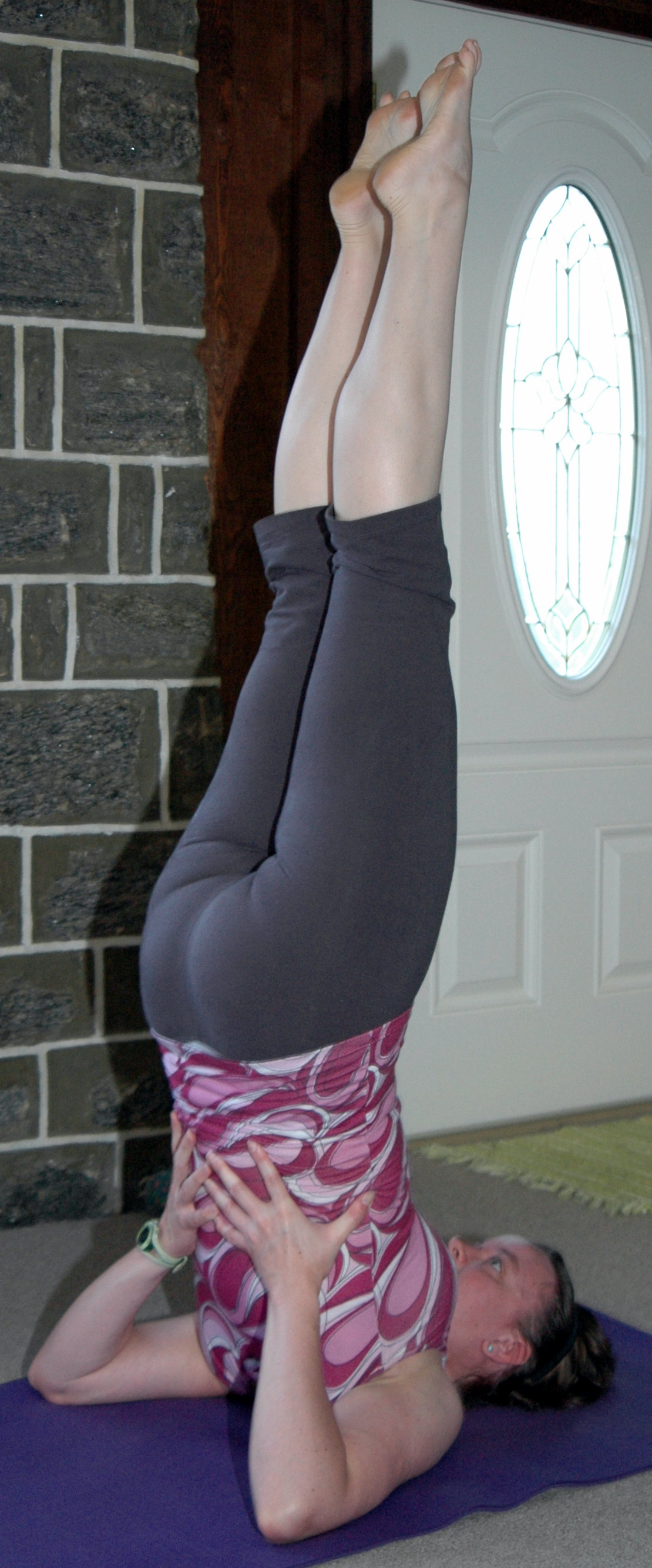
Shoulderstand 1Pose Name:

Shoulderstand

Sanskrit Name:

Salamba Sarvangasana (“salamba” means “supported”; there are other forms of shoulderstand practiced without arm support)

Steps:

  1. Begin by lying flat on your back on the mat. Bend your knees and walk your feet close to your sitting bones.
  2. Pressing your arms into the mat, lift your legs, curling your thighs in to your chest and your knees toward your face, lifting your pelvis and back off the floor.
  3. Shimmy your shoulders together underneath you. Place your palms against your back for support. Press your upper arms into the floor and lift the pelvis to be over the shoulders, so that the torso is perpendicular to the floor.
  4. Try to work the elbows closer together so that the upper arms are parallel. As you lift, walk the hands up your back (towards the floor) – this will give you more support as you lift your hips. (It may help to put your palms against the skin of your back; if you find your hands slipping, try lifting your shirt and placing the hands against your skin.)
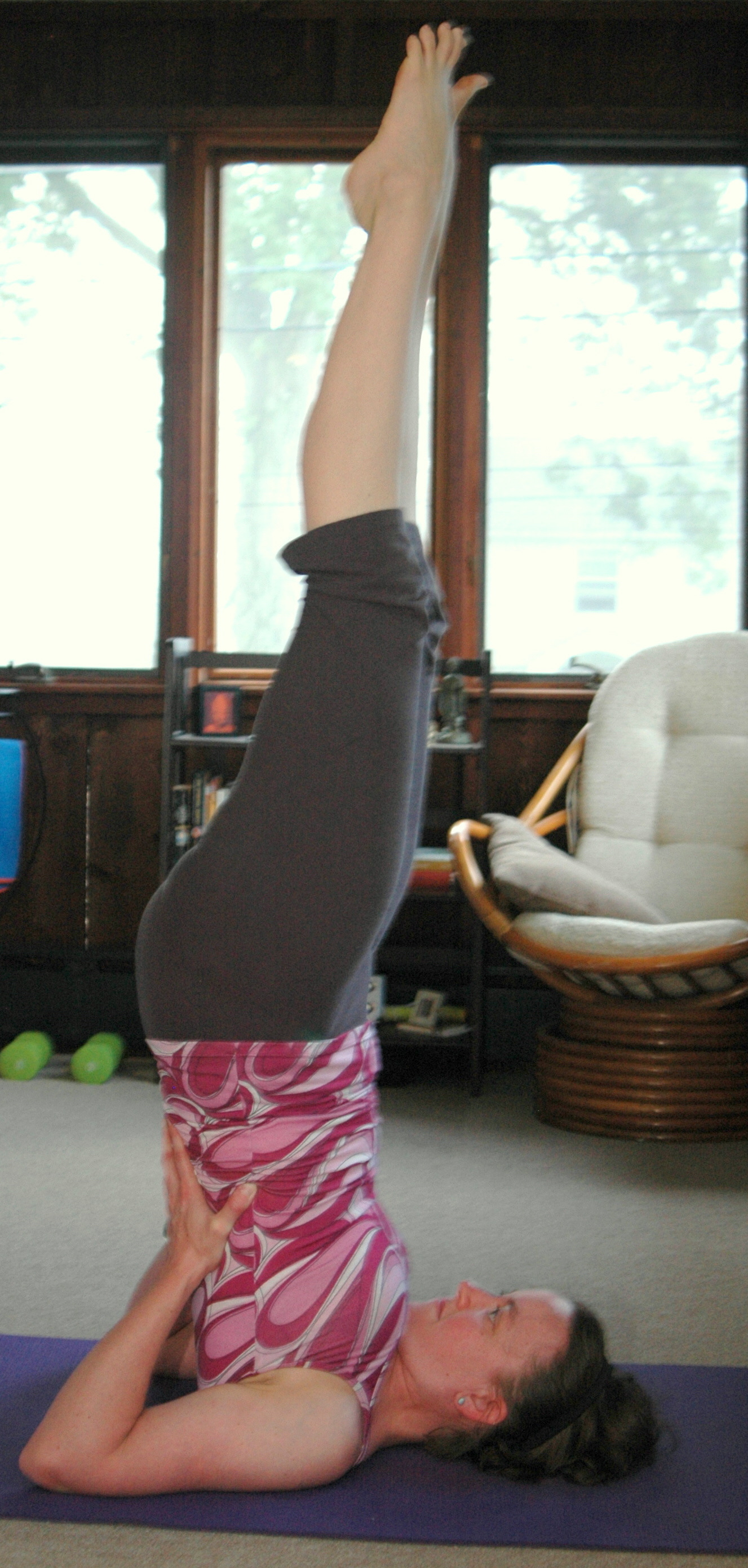
  5. Begin to lift the legs into the air. Bring the thighs and finally the lower legs in line with the torso, so the whole body is a long, straight line perpendicular to the floor.
  6. Find your balance here. Your weight should be in your upper arms, your shoulders, and a little on the back of your head – there should be no weight or pressure on the neck.
  7. Press the legs together. Press the balls of the feet toward the ceiling. Activate your thighs, buttocks, and abdominal muscles to help hold you up.
  8. Keep breathing. Keep the body active throughout the pose; press through the upper arms and keep the shoulders engaged.
  9. To come down, gently lower the legs, bringing the knees down to rest on the forehead.
  10. If you wish, take plow pose: lower your toes to the floor above and beyond your head, extending the legs and keeping the torso perpendicular to the floor. Clasp the hands behind your back and press the arms into the floor.
  11. Coming out, keep your head resting on the floor and press your fingertips into the floor while you gradually roll out on a curved spine. Follow shoulderstand with fish pose as a counterpose.

Shoulderstand 2Benefits:

Shoulderstand is known as the queen of yoga postures (headstand is the king). Inversions alter the flow of blood in the body; this can calm the mind, help with depression, and stimulate the thyroid gland. The muscle control needed to hold the body in an inverted pose works the internal organs and the abdomen, aiding digestion, and builds strength, toning the legs and buttocks. Shoulderstand, when done properly, stretches the neck (when not done properly, it can turn into neckstand, which hurts the neck, so care is needed!).

Contraindications:

Those with serious neck injuries should not practice shoulderstand, or should do so only under the supervision of an experienced instructor. Using a stack of folded blankets to support the shoulders will help those with neck problems to practice the pose.

Shoulderstand is contraindicated for headache and high blood pressure. Some sources say not to practice inversions while menstruating. If the student is experienced, shoulderstand can be practiced until late in pregnancy, but if you don’t already practice the pose, you shouldn’t begin practicing shoulderstand after becoming pregnant.

My Experience of Shoulderstand:

When I was a teenager, I didn’t have a phone in my room, so I always used the one in my parents’ room. The second floor of the house had been converted from an attic into bedrooms, so on one side of my parents’ room the ceiling slanted all the down to about two feet off the floor. As a teenage girl spending long hours on the phone, I sometimes got bored and would lie on the bed and walk my feet up the ceiling. So, when I attended my first yoga class years later, I had no trouble doing shoulderstand – it was just like talking on the phone in my mom’s room! Being a silly teenager had paid off for once; I’d been doing a supported shoulderstand for years and was comfortable with both the mechanics of the pose and with being upside down in general.

As I progressed through my yoga practice, my shoulderstand has improved even more, especially recently as I began paying close attention to the logistics of each pose with an eye to teaching. Now my husband says that my shoulderstand looks kind of freakish, like my head isn’t attached to my body, which I think means that I’m doing it right.

Unfortunately, not everyone grew up in my parents’ house, and for many people shoulderstand is really challenging. I’m discovering this firsthand by teaching a small weekly class at my home. Teaching shoulderstand for the first time was hard for me, and a few of my beginning students just couldn’t do it. One person will need to work on her core strength to make this pose achievable. I want to try teaching the pose with blankets for additional support, and I also want to teach some other inversions so that students who can’t manage shoulderstand yet will have some other options.

Back to my own practice, I really enjoy shoulderstand: how strong I feel in the pose, and the feeling of being upside down. For right now I am taking a break from doing headstand because of neck pain, so coming back to shoulderstand feels good and helpful.


Yoga in the News: Yoga, Annoying? Surely Not! September 10, 2011

Filed under: yoga,yoga lifestyle — R. H. Ward @ 2:25 pm
Tags: , , ,

Just spotted this article: Annoying? Yoga? Surely Not! I feel like I ought to be offended but instead I think it’s hilarious. Because we yoga people do all of this stuff. We hug too much and use yoga vocabulary that sounds silly and talk about how the universe has plans for us. Definitely keep your flip flops handy, but keep coming back too.

(Tagging this post with my “yoga for beginners” tag, because this is stuff that beginners should know in addition to the useful things I posted about before!)


Books: Bhagavad Gita September 9, 2011

Filed under: bhagavad gita,books,yoga philosophy — R. H. Ward @ 2:06 pm
Tags:

The Bhagavad Gita, translated by Eknath EaswaranThe Bhagavad Gita is one of India’s best known scriptures. It tells the story of Arjuna, a warrior on the eve of battle who has lost heart and become uncertain as to his duty. Arjuna turns to his spiritual guide, Krishna, for answers to all the key questions of life, questions about wisdom and service and spirituality. The battle that Arjuna is about to fight is the perfect metaphor for life and the interior battle we all fight to live a life that is meaningful and fulfilling. The Gita, in essence, is a manual for how to live.

For my yoga teacher training, we were asked to read a translation of the Bhagavad Gita by Eknath Easwaran. On the back cover, Easwaran’s version is described as “reliable” and “readable”, and this is definitely true. Easwaran opens the book with an introduction to the Gita, setting the scene, and then each chapter of the Gita opens with a brief introduction that explicates the content of that chapter. This makes the story easy to follow, and really helps in understanding the context of Arjuna’s and Krishna’s conversation. The endmatter of the book includes a section of notes (typically, helpful insights on issues of translation), as well as a glossary of Sanskrit terms and an index. Easwaran’s version really focuses on making the Gita accessible for the reader, so this version is a great place to start if you’re reading the Gita for the first time.

I had read the Bhagavad Gita previously, in Stephen Mitchell’s translation. Mitchell is known as a translator of ancient poetry – he’s done the epic of Gilgamesh and the Tao Te Ching, among others. The great thing about Mitchell’s work is that he finds a way to take this ancient poetry written in another language and capture not just the meaning but the beauty of the language. Easwaran’s translation of the Gita is verse, but Mitchell’s translation is poetry. The last time I read it, I was looking mostly at the poetry; I decided to read it again, and this time, it was really enjoyable to read the book in a different context, looking more at the content, the instructions for how to live. Definitely got more out of it this time.

When we were assigned to read the Bhagavad Gita for class, I chose to read both versions back to back. I didn’t try to do a line-by-line comparison (that would defeat the purpose of reading it at all, really). Instead, I re-read the Mitchell translation, and then read the Easwaran translation, in the hope that reading both versions would deepen my understanding. I think it did, but I also felt a little burnt out by the time I got to the end of the Easwaran version. I definitely want to reread both versions again, but next time I’ll space them out more.


Revelation # 56: Yogis are not missionaries September 8, 2011

Filed under: reflections,yoga,yoga lifestyle,yoga philosophy — R. H. Ward @ 4:46 pm
Tags:

At last month’s yoga teacher training weekend, one concept really struck me and has stuck with me. It’s the idea that yogis aren’t missionaries. Now, nobody ever said that they were, but I was raised Catholic – my childhood religion classes were filled with stories of missionaries, going out into the wild to educate and spread the good news of Jesus. Such people were held up as heroes for us to emulate. Coming from this background, the concept of spreading the word and converting others to your faith is very familiar to me.

Which is why it blew my mind when I realized that yogis aren’t missionaries. It’s a concept that just doesn’t fit in with the yoga worldview. Sure, if you seek out a yogi based on a sincere desire to learn, the yogi will teach you, but he’s not going out looking for students. That’s not his job.

Yogis don’t preach or proselytize because they believe that each person has the responsibility for his or her own spiritual development. In the Yoga Sutras and in the Bhagavad Gita, it’s made clear that your responsibility is to yourself first; you should take action primarily to preserve your own calm mind. Consider the parakarmas: this wisdom, straight from Yoga Sutra I.33, is intended to help you in your relationships with others – to help you treat others better, yes, but mostly to help you live in the world and still keep your serenity. According to the scriptures, your job is to take care of yourself and your own spiritual development. It’s not your job to worry about anyone else’s. The yogi knows that he’s on a good path, but he also knows that there are other paths that people can follow, and that’s up to them. The yogi isn’t responsible for saving the world; instead, he leads by example, practicing kindness and service, demonstrating the goodness he wants to see in the world.

Understanding this has been a big realization for me. I feel that I’ve found a good spiritual path for myself in yoga, but I don’t have to go out and shout about it. There’s no onus on me to try to convince anyone else that this is a good spiritual path. My path may not be for everyone. What’s more, as J has said all along, my spiritual practice is private; it’s my own and not anyone else’s business. This too is different from how I grew up: in Catholicism, demonstrating your faith in community is important. For me as a yogini, community is still important – the community of yoga classes that I attend and the classes I will someday teach, as well as the community I find in my local Unitarian Universalist church – but ultimately my spiritual practice is personal.

I want to be a yoga teacher, which means sharing my yoga and my spirit with my students. But being a teacher doesn’t mean being a missionary. I believe yoga has the power to heal both bodies and minds, but I don’t have to go out and advertise that or force that belief on anyone – as long as I work hard and put myself out there as a teacher, people who need yoga will find their way to me.


Books: The Secret Power of Yoga: A Woman’s Guide to the Heart and Spirit of the Yoga Sutras, by Nischala Joy Devi September 7, 2011

Filed under: books,yoga philosophy — R. H. Ward @ 4:13 pm
Tags: ,

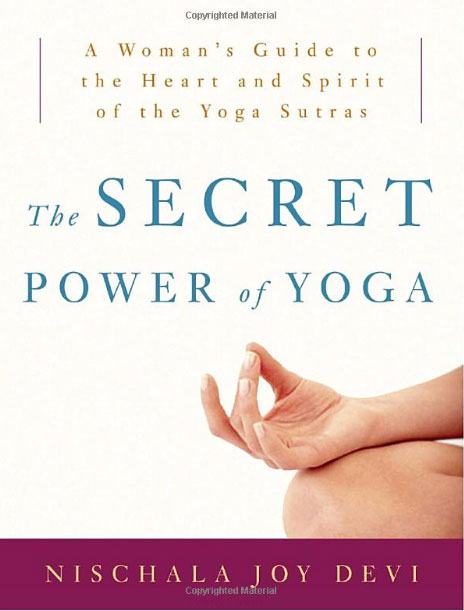
The Secret Power of Yoga: A Woman's Guide to the Heart and Spirit of the Yoga SutrasNischala Joy Devi’s interpretation of the yoga sutras offers a different take from most traditional translations. Devi set out to write a book that explicates the yoga sutras from a heart-centered, more “feminine” perspective. She realized that most of the existing translations of the sutras were written by men, and she noticed many of her female students commenting that the sutras didn’t seem to relate to them. Devi set out to complete a more accessible text for women. She sought for her book to embrace both thoughts and feelings (rather than separating thoughts from feelings, which is often done in Western culture). She generally uses the terms “consciousness” and “heart” where the customary translation would read “mind” and “thoughts”.

Overall, I think Devi’s technique was effective.The first time I read the sutras was in this translation, and it was difficult for me; I’m not sure how I would have fared with a more traditional translation. At least with Devi’s version I felt as if the book was intended for ME.  For the most part, Devi uses real life examples that made sense in relation to how to practice the sutras in a real woman’s busy life.

On this reread, I was also simultaneously reading Sri Swami Satchidananda’s translation of the sutras; Satchidananda was Devi’s spiritual teacher, so it was very interesting to see where the two of them interpret the sutras differently and where they have a similar approach. In many instances, Satchidananda and Devi say much the same thing, but Devi couches her language in ways that feel more familiar and welcoming for a modern woman. Part of me wants to call this “the sutras – lite”, but it’s not light at all, it’s just a different take that… well, doesn’t feel quite so difficult, even though it’s the same material.

One thing I would have really liked in this book is a glossary; Devi naturally uses a lot of Sanskrit terms. The first time I read the book, it took me several months to complete it, and reading it over such a long period of time, I definitely got my dharmas and dharanas and dhyanas crossed. There is an index, which is helpful, but rather than looking up where the word first appeared and then going there to refresh myself about the definition, it might have been more effective just to have a glossary. (Satchidananda’s translation does include a glossary.)

Overall, I recommend this book for women who are looking to deepen the spiritual side of their yoga practice or meditation. I also recommend it for men who, like me, don’t connect so much with the mind/thoughts rhetoric in spiritual books.


Yoga in the News: Anti-gravity yoga? September 5, 2011

Filed under: yoga — R. H. Ward @ 5:14 pm
Tags: , ,

A friend sent me the link to this: Anti-gravity yoga class. The pictures are pretty amazing, but I can’t imagine I would do anything but fall the hell out if I tried that stuff. At the bottom of the photo blog there’s a link for more information; that link doesn’t work, but here’s the correct one. I love how the “suggested clothing” listed includes “shirts with sleeves that cover under arms”, but half the people in the photo on that page are wearing tank tops or halters. Maybe those people have greased themselves so the hammocks won’t catch on their skin?

Don’t get me wrong, props can be incredibly useful for yoga practice, especially for people with a limited range of motion, people recovering from injuries, and people with disabilities. Props can make yoga accessible for such people and help them to become fitter, stronger, and more flexible. At my yoga center, however, we’re taught that all you need for yoga are your own bare feet and a mat (and you can make do without the mat). Props can be wonderfully helpful, but the goal of using props should be to get to the point where you don’t need the prop anymore. A trend can be fun and exciting, but we shouldn’t lose sight of what yoga is all about: making the body healthy and calming the mind. I think if I were hanging upside down from an orange hammock I would have some difficulty calming my mind. (I could be wrong. I would totally love to find out!)

Anti-gravity yoga class at Om Factory in New York

(Image from http://photoblog.msnbc.msn.com/yoga, Shannon Stapleton / Reuters)


Books: The Yoga Sutras of Patanjali, trans. and commentary by Sri Swami Satchidananda September 2, 2011

Filed under: books,yoga philosophy — R. H. Ward @ 1:23 pm
Tags: ,

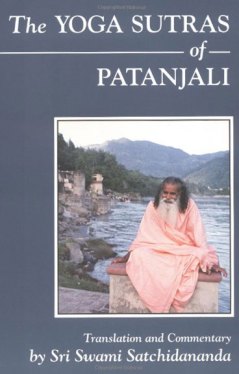
The Yoga Sutras of PatanjaliThe Yoga Sutras, the key text in the study of yoga, is an ancient text dating back at least 2000 years. The sutras were compiled by the sage Patanjali (pah-TAN-ja-lee). Patanjali didn’t invent the concept of yoga, but he made a system of it by bringing together all the existing teachings and traditions and giving them a structure for students to follow. The word “sutra” means “thread” – the text is a collection of almost 200 brief “threads” of wisdom. Patanjali used as few words as possible in each sutra with the idea that students would be learning from an established teacher, who would expound upon each sutra in turn. Sri Swami Satchidananda takes on that role in this translation of the sutras and the accompanying commentary.

The sutras are traditionally grouped into four books: Book One, Contemplation; Book Two, Practice; Book Three, Accomplishments; and Book Four, Absoluteness. For most students, just reading Books One and Two is sufficient – the last two books contain the more esoteric teachings. For my teacher training we actually started by jumping right in with Book Two, the practical teachings, and this certainly isn’t a bad idea. For Patanjali, the physical practice of yoga is simply a means of calming the mind, and the vast majority of the sutras are about the mind; it can be a little easier for the modern student to begin with the practical sutras in Book Two before working on the contemplative sutras in Book One.

This version of the sutras follows a helpful format: for each sutra, the original Sanskrit is given, along with the Sanskrit transliteration, the literal translation, and finally a translation set in readable English prose. This structure could appeal both to the serious Sanskrit student as well as to the beginning student (who can just skip right to the English). After each sutra follows commentary from Swami Satchidananda. At first I found the commentary to be rather dry, but after journeying through the whole book I came to enjoy his tone and appreciate his stories. Satchidananda’s translations of the sutras are very straightforward, and his commentary really elucidates each sutra and gets to the heart of what Patanjali is saying.

Overall, this is a good translation of the Yoga Sutras for beginning students, and for those who have studied the sutras before, Satchidananda’s commentary is a worthwhile reason to choose this edition for a re-read.


The Parakarmas, part 2: celebrating the good, staying impartial to the bad September 1, 2011

Filed under: yoga philosophy — R. H. Ward @ 1:19 pm
Tags: , ,

The parakarmas, discussed in Sutra I.33, are four attitudes that, if we practice them, will help us in our relationships with other people. Swami Satchidananda says that if you’re going to remember just one of the yoga sutras, it should be this one, for the power it has to help us keep a serene mind.

The sutra reads as follows:

By cultivating attitudes of friendliness toward the happy, compassion for the unhappy, delight in the virtuous, and disregard toward the wicked, the mind retains its undisturbed calmness. (page 54)

Nischala Devi translates it just a little differently, with a little less judgment on the “wicked”:

To preserve openness of heart and calmness of mind, nurture these attitudes: kindness to those who are happy, compassion for those who are less fortunate, honor for those who embody noble qualities, and equanimity to those whose actions oppose your values. (page 77)

Yesterday we discussed the first two parakarmas (friendliness toward the happy, compassion for the unhappy). The last two are a little trickier.

  • Delight in the virtuous / honor for the noble

This attitude can be summed up as “celebrating the good in others”. I have a friend who goes to Nicaragua every year to volunteer in an orphanage for disabled children. I know a woman who overcame great personal hardship to raise her son, her daughter who has a serious heart condition, and her youngest child, a small boy who also has a serious health problems whom she adopted from China. I know a perfectly ordinary guy with a job and a kid who feels so passionately about cancer research that he organizes a huge fundraiser every year as a volunteer, putting in hours of his time and energy to help others. Everybody knows someone like this, and we all wonder how on earth such people exist: come on, can they really be that nice? But we’re just looking at the whole picture, without the benefit of the context of the little moments that brought that person here. In each individual moment, that person was just trying to make the best choice she could, the same way that we all do. The sum of those choices may be a larger-than-life story that doesn’t seem real, but at the center is a regular, fallible person doing their best. Don’t envy that person (because you don’t know what he had to go through to become who he is), and don’t gossip or try to pull that person down. Instead, admire him, or use her as an example for your own conduct. Such people deserve our respect for all the love and goodwill and service they put into the world, and they deserve to be celebrated – we need more of them!

  • Disregard toward the wicked / equanimity to those whose actions oppose your values

Devi’s translation is a little more politically correct than Satchidananda’s, but it comes to the same thing: don’t let it upset you. (Don’t let the bastards get you down!) There will always be people who seem wicked or wrong, people who have values different from our own. Some people are just like that; maybe you or I used to be like that too. Maybe it’s something as simple as someone driving like a jerk on the highway – we don’t know what made that person act that way, so all we can do is hope he’ll do better tomorrow. Or maybe it’s someone you must interact with (a distant relative, a coworker) whose views are just totally different from yours: these are the most difficult people, because what do you say? Nothing you can do will convince this person to change his mind. If you want to preserve your own serenity, the best course of action is just to let it go: don’t get angry, don’t argue, and don’t let it upset you. Be as polite as possible, and when the situation has passed, put that person out of your mind. Don’t spend the next two days arguing about it in your head – that’s not going to change the other person, but it does change you. Why choose to get upset and keep rehashing angry words? Let it go.

N & J described this attitude as “remaining impartial to the faults and imperfections of others”. I like this rephrasing a lot because it reminds us to keep this attitude not just with nasty Uncle Larry or with Susan in marketing, but also with the people closest to us. I’m not perfect and I’m never going to be, but it’s easy to forget that my friends and loved ones aren’t perfect either. I may have high expectations for them – and we often expect the best from the people we love, don’t we? – but they have faults and imperfections too, and they make mistakes. If we can remain impartial when those mistakes happen, we’ll be able to be kinder to the person in that moment, and we’ll be better able to preserve our own calmness of mind without getting angry or disappointed.